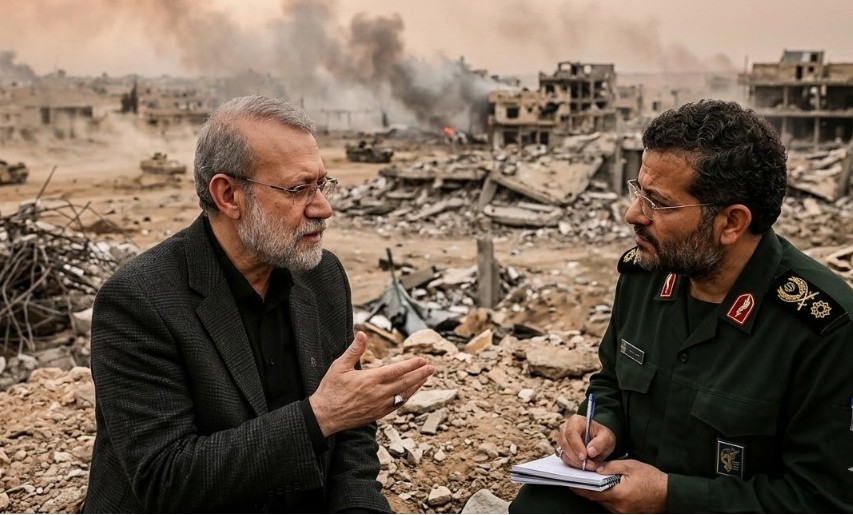
Wednesday, March 18, 2026: Iran has launched fresh attacks on Israel in retaliation for the killings of senior security figures, marking a sharp escalation in the ongoing West Asia conflict. The attacks come hours after Iran confirmed the deaths of top officials, including security chief Ali Larijani and Basij commander Gholamreza Soleimani, in Israeli airstrikes.
At least two people have been killed in the latest wave of strikes, as Tehran expands its response beyond Israel to target US-linked interests across the region.
Retaliation After Leadership Killings
The attacks come hours after Iran confirmed the deaths of top officials, including security chief in Israeli airstrikes. Both figures were among the most powerful in Iran’s military and political structure, and their killings are seen as a major blow to Tehran’s leadership.
Iran had earlier vowed “decisive retaliation,” and the latest missile and drone attacks appear to be part of that response.
Missiles Hit Israel, Casualties Reported
Iranian projectiles struck multiple locations in Israel, with emergency services confirming at least two deaths.
The strikes are part of an ongoing barrage that has intensified since the conflict began in late February, following joint US–Israel attacks on Iranian targets.
Air raid sirens were reported in several areas, with authorities urging civilians to remain in shelters.
Conflict Spreads Across the Region
The escalation is no longer confined to Israel.
A separate attack targeted the US embassy in Baghdad, raising fears of a widening conflict involving American assets in the region.
Meanwhile, Gulf countries including Bahrain, Kuwait, Qatar, Saudi Arabia and the United Arab Emirates reported intercepting incoming Iranian drones and missiles.
Regional air defence systems remain on high alert as multiple threats are tracked across West Asia.
Tehran Signals Defiance
Iran’s Foreign Minister Abbas Araghchi said the country’s political system remains stable despite the assassinations.
He insisted that the killings of senior leaders would not weaken Tehran’s resolve or disrupt governance, projecting confidence amid growing pressure.
His remarks come as Iran faces one of the most serious leadership crises in recent history following a series of targeted strikes.
US Pressure Mounts, Trump Targets NATO
In Washington, Donald Trump lashed out at NATO allies for refusing to deploy naval forces to the Strait of Hormuz.
The strategic waterway, a critical route for global oil shipments, has become a focal point of tensions as the conflict intensifies.
Trump’s remarks highlight growing divisions among Western allies over how far to escalate military involvement.
Resignation Signals Internal Strain
In a sign of mounting pressure within the US administration, Joe Kent, director of the National Counterterrorism Center, has resigned over the war.
The move underscores internal disagreements over strategy as the conflict deepens and spreads across multiple fronts.
The latest developments point to a rapidly widening conflict:
- Direct Iran–Israel exchanges intensifying
- US-linked targets under threat
- Gulf nations drawn into defensive operations
Oil markets and global security concerns are also rising as the Strait of Hormuz remains under threat.
What Next
With Iran stepping up retaliation and the US signalling continued pressure, the risk of a broader regional war is growing.
All eyes are now on whether further strikes, or new actors, will push the conflict into an even more dangerous phase.