October 11, 2026: Pradhama Drishtya Kuttakkar begins with an interesting contradiction: the people who know the law best are the ones who find themselves in trouble with it. But what makes this Malayalam crime thriller so gripping is not simply the prospect of police officers turning into culprits. It is the uneasy feeling that, given the right circumstances, the line separating the two may not be as difficult to cross as we would like to believe.
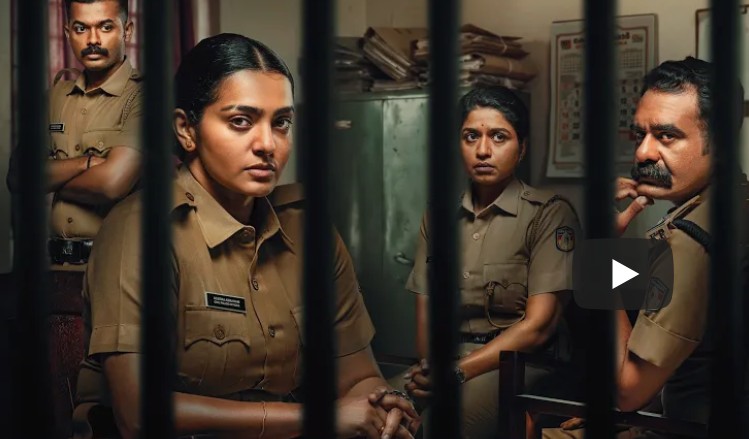
Director Shahad takes his time getting there. Instead of opening with a murder, a chase or an elaborate criminal scheme, the film introduces us to four police officers whose lives are anything but extraordinary. Aleena (Parvathy Thiruvothu) is a young widow who joins the force on compassionate grounds after losing her husband. Her world revolves around her little daughter, and her new job offers a chance to rebuild what life has taken away. Divya (Unnimaya), a senior constable, is dealing with the private anguish of being unable to conceive despite repeated attempts. Dasan (Siddharth Bharathan) and Sreenath (Mathew), meanwhile, are waiting for their own lives to move forward after years of uncertainty.
There is no grand heroism in these introductions. These are people with personal problems, professional frustrations and the occasional bruised ego. At the police station, they go about their duties, clash with a difficult superior and navigate the familiar politics of a workplace. They do not look like the sort of officers who would inspire a rousing police drama, and that is precisely the point.
Shahad and writers P. S. Subramanian and Vijesh Thottingal make us spend time with these characters before asking us to judge them. It is a decision that pays off handsomely when the story of Pradhama Drishtya Kuttakkar takes a turn and the four find themselves caught in a serious wrongdoing. By then, they are no longer just names in a case file. We know enough about their lives to understand their vulnerabilities, even when their actions leave us questioning our sympathies.
That is when Pradhama Drishtya Kuttakkar finds its footing as a crime thriller. The question is no longer simply what happened, but how far these officers will go to keep what happened from destroying their lives.
The film Pradhama Drishtya Kuttakkar‘s greatest strength is its understanding that ordinary people do not necessarily become extraordinary criminals when they make a terrible mistake. Sometimes, they remain ordinary people, trying to contain the consequences of a decision that has already slipped beyond their control.
There is no criminal mastermind here, no impossibly clever Georgekutty-like figure who has anticipated every possible outcome. These officers know the police system because they work within it, but that knowledge is not the same as knowing how to outsmart it. They understand the seriousness of their predicament, yet every attempt to manage it threatens to make things worse.
A mistake leads to a cover-up. A cover-up demands another decision. And every new decision opens the door to another possible disaster. The tension comes from watching people who should know better discover that professional familiarity offers little protection when they are the ones under scrutiny.
Then comes Harris Meeran, played by Vijayaraghavan, and Pradhama Drishtya Kuttakkar finds an entirely different gear. Meeran is the sort of officer audiences have come to associate with formidable police investigations: experienced, respected and confident in his ability to get to the bottom of a case. He carries the authority of a man who has spent years earning his reputation, and he does not need to announce his competence for it to be felt. His presence alone changes the stakes for Aleena and her colleagues.
What follows is a fascinating contest between four officers trying to keep their mistakes hidden and a senior investigator who knows how to look beyond the obvious. The irony is delicious. These are not outsiders attempting to defeat the police; they are insiders who understand the institution well enough to know where its attention might fall, but not well enough to guarantee that they can stay ahead of it.
The film makes this confrontation particularly effective because neither side has an absolute advantage. Aleena and her colleagues have their own knowledge of the circumstances, but Meeran has the experience to recognise inconsistencies. They know what they want him to believe; he knows that the truth often resides in the details people consider too insignificant to matter.
And the details matter enormously here. A mobile phone, for instance, can become more than a communication device. The way it is handled, the information associated with it and the decisions surrounding its use can all influence the direction of an investigation. Such details might seem trivial in another film, but here they become sources of genuine anxiety. Every small move carries the possibility of exposure, and every apparent solution comes with the nagging suspicion that something has been overlooked.
This is where the Pradhama Drishtya Kuttakkar distinguishes itself from thrillers that mistake complexity for intelligence. The officers’ plans are not presented as flawless constructions designed to leave the audience gasping at their brilliance. They are attempts to stay afloat in increasingly dangerous waters. Even when they come up with clever ideas, there is always room for something to go wrong.
That uncertainty keeps the narrative on edge. You are not simply waiting for the next revelation; you are watching for the moment a seemingly manageable situation begins to unravel. The suspense lies in the distance between what these characters think they have covered and what an experienced investigator might discover.
Vijayaraghavan gives the Pradhama Drishtya Kuttakkar a formidable counterweight to Parvathy’s quieter, more vulnerable characterisation. His Meeran is a man accustomed to being right, and the film gradually turns that confidence into a source of tension. The investigation begins as a professional challenge, but the resistance he encounters brings his pride into the equation. Having to contend with officers much younger and less experienced than himself is not merely an obstacle to solving the case. It is also a challenge to the authority he has spent years establishing.
This is a perceptive touch. A good investigator can recognise evidence, question suspects and follow leads, but no amount of experience makes someone immune to ego. Meeran’s reputation is part of his strength, yet it also creates expectations that can cloud his judgement. As the case becomes more complicated, the distinction between pursuing the truth and proving himself right grows increasingly important.
Parvathy, meanwhile, gives Aleena a compelling emotional centre. The character’s grief and responsibilities make her situation understandable, but the performance never needs to turn her into a figure of unqualified sympathy. Aleena remains a police officer with choices to make and consequences to face. Her vulnerability makes the predicament more affecting, not less serious.
Unnimaya, Siddharth Bharathan and Mathew contribute to the sense that this is a group of people with lives extending beyond the immediate demands of the plot. Their personal circumstances are not decorative backstories. They help explain why the stakes feel so immediate and why the possibility of losing everything weighs so heavily on the characters.
Pradhama Drishtya Kuttakkar Review: A Razor-Sharp Thriller Where Every Small Detail Matters
What makes the ensemble work is that Pradhama Drishtya Kuttakkar does not insist on making everyone equally innocent or equally guilty. People can be sympathetic and still be wrong. They can have understandable reasons for their actions without being entitled to forgiveness. The film allows these contradictions to exist without rushing to resolve them.
That refusal to simplify its characters gives the investigation a moral dimension that extends beyond the familiar question of whether the culprits will be caught. The more interesting question is what justice means when the people who have compromised it are not strangers to the system, but members of the very force expected to uphold it.
Shahad’s approach is refreshingly grounded in this respect. The police station is not populated by spotless heroes and obvious villains. It is an institution inhabited by people whose professional responsibilities coexist with personal disappointments, ambitions and insecurities. Authority does not automatically produce integrity, just as experience does not necessarily produce wisdom.
The result is a film that makes its moral uncertainty feel earned rather than manufactured. We understand the officers well enough to see the pressures acting upon them, but the film never asks us to confuse understanding with absolution. Their predicament may invite sympathy, yet the law cannot be expected to disappear simply because the people who break it have compelling personal stories.
That tension is the film’s real subject. Its procedural details provide the machinery of suspense, but its characters supply the reason to care about the outcome.
There are moments when the film’s painstaking attention to the investigation threatens to overwhelm the human drama, but that same attention is also what gives the narrative its distinctive texture. The case does not move forward through convenient revelations alone. It develops through small decisions, imperfect strategies and the growing realisation that the people involved may have underestimated what they are up against.
Most importantly, Pradhama Drishtya Kuttakkar understands that a thriller does not need to make its characters infallible to make them interesting. In fact, their fallibility is what keeps the story alive. Every mistake leaves room for another complication, every attempt at control invites fresh uncertainty, and every new development makes it harder to predict who will ultimately come out on top.
The film’s most unsettling achievement is that it makes us reconsider our own instinct to divide the world neatly into those who uphold the law and those who break it. The badge may establish authority, but it cannot guarantee good judgement. Professional experience may help an officer uncover the truth, but it cannot prevent personal pride from interfering. And a person’s circumstances may explain a wrongdoing without erasing it.
By the time the investigation gathers momentum, the question of guilt has become much more complicated than the title initially suggests. These are people whose actions must be judged, but they are also people whose lives we have been allowed to see up close. That proximity creates an uncomfortable conflict between what we know is right and what we find ourselves hoping will happen.
That is the difference between a routine police thriller and one that stays with you. The former asks you to wait for the culprit to be exposed. The latter makes you wonder what you would do if the person under investigation were someone you understood, someone whose fears and weaknesses looked uncomfortably familiar.
Pradhama Drishtya Kuttakkar succeeds because it never lets the mechanics of the investigation completely eclipse the people caught inside it. With strong performances from Parvathy Thiruvothu and Vijayaraghavan, a carefully constructed procedural and a story that refuses to offer easy moral answers, Shahad delivers a gripping Malayalam crime thriller that finds its greatest tension in the space between guilt and justification.
The most disturbing thing about these officers is not that they make a mistake. It is how convincingly they can explain it to themselves, and how quickly one wrong decision can turn into a desperate attempt to protect everything they have left.
Rating: 4.5/5