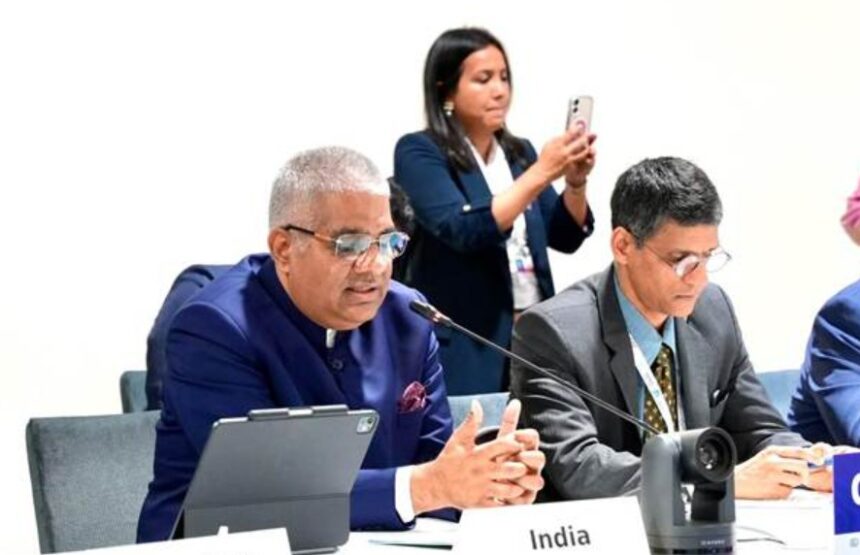
COP31, November 18, 2026: India has called for a stronger global push to turn climate commitments into practical investments in disaster resilient infrastructure, placing adaptation finance, early warning systems and technology access at the centre of discussions at COP31 in Antalya, Turkey.
Speaking at the Ministerial Dialogue on Disaster Resilient Infrastructure for Climate Adaptation, Union Environment Minister Bhupender Yadav stressed that international climate discussions must translate into visible action on the ground, particularly in countries with limited financial and technical resources.
The intervention comes as governments face growing pressure to strengthen infrastructure against climate related disasters. Yadav called for greater international cooperation, knowledge exchange and capacity building, with particular attention to developing countries that need access to proven technologies and affordable financing.
COP31: Why Developing Nations Need Resilience Finance
He argued that building resilient infrastructure requires more than policy commitments. Strong institutions, technical expertise and sustainable funding are equally important to ensure that infrastructure can withstand disaster risks and support long term climate adaptation.
The minister highlighted the role of the Coalition for Disaster Resilient Infrastructure (CDRI), describing it as a platform that brings together governments, international institutions, development partners and technical experts. The coalition aims to strengthen cooperation, share best practices and improve the resilience of infrastructure across countries.
Discussions at the ministerial dialogue reflected how differently countries are experiencing climate risks, while pointing to a common challenge: the need to finance preparedness before disasters cause widespread damage.
Trinidad and Tobago highlighted the importance of cooperation with India on grants, affordable financing, risk assessment and agro based processing. Namibia drew attention to the impact of severe drought on rural livelihoods and called for adequate financing to strengthen disaster prevention infrastructure.
Japan stressed the need to accelerate early warning systems, share disaster risk reduction expertise and build stronger regional networks in disaster prone countries. Guatemala called for affordable financing, while Jordan sought greater cooperation to improve access to funding and strengthen infrastructure use.
These priorities underline an important dimension of climate adaptation. Resilience depends on the ability of countries to prepare for risks before they become emergencies. Early warning systems, reliable infrastructure, risk assessments and access to finance all form part of that preparedness.
Yadav called for countries to move beyond shared declarations and develop collaborative initiatives that deliver measurable results. He emphasised that progress in adaptation, mitigation and disaster resilience would depend on collective action and stronger institutional capabilities.
For developing economies, the financing question remains central. Without affordable capital, technical support and access to established technologies, many countries will struggle to strengthen essential infrastructure against climate risks.
The COP31 dialogue has brought these concerns into sharper focus. The challenge ahead is to ensure that international cooperation delivers the resources and practical support needed to protect communities, livelihoods and critical infrastructure.