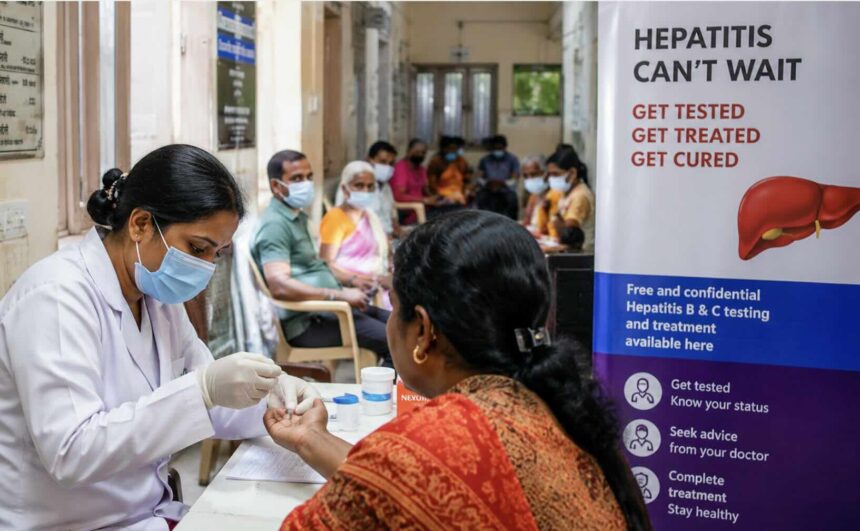
July 27, 2026: India’s fight against viral hepatitis has steadily evolved over the past few years, from treating individual patients to building a nationwide public health strategy aimed at eliminating the disease as a major health threat by 2030.
The government’s National Viral Hepatitis Control Programme (NVHCP), launched in 2018, has become the cornerstone of this effort. What began as a programme focused on screening and treatment has grown into an integrated healthcare initiative that combines vaccination, early diagnosis, surveillance, awareness and free access to medicines and diagnostics across the country.
The approach reflects a broader shift in public healthcare. Instead of treating hepatitis as a standalone disease, India is embedding prevention and treatment into existing national health programmes, allowing services to reach more people through an already established healthcare network.
Hepatitis: A Silent Disease That Often Goes Unnoticed
Hepatitis refers to inflammation of the liver and can be caused by viruses, alcohol, certain medications or autoimmune conditions. Of the five major hepatitis viruses; A, B, C, D and E, hepatitis B and hepatitis C account for the majority of chronic infections and can lead to cirrhosis, liver failure and liver cancer if left untreated.
One of the biggest challenges is that many people remain unaware they are infected. Hepatitis B and C can progress silently for years before symptoms appear, making routine screening critical for early diagnosis and treatment.
According to India’s 2021 HIV Sentinel Surveillance, around 0.85% of those surveyed tested positive for hepatitis B, while 0.29% tested positive for hepatitis C. While these percentages may appear small, they represent millions of people in a country of more than 1.4 billion.
Prevention Is Becoming the First Line of Defence
The government’s strategy recognises that preventing infection is often more effective than treating advanced disease.
For hepatitis B, vaccination remains the most powerful tool. The vaccine is already included under the Universal Immunisation Programme, with newborns receiving a birth dose within 24 hours followed by routine immunisation.
For hepatitis A and E, the focus is on improving sanitation, ensuring access to safe drinking water and promoting hygiene practices.
Hepatitis C presents a different challenge because there is currently no vaccine. Instead, prevention depends on safe medical practices, screened blood transfusions and reducing exposure to contaminated needles. The encouraging development is that modern Direct-Acting Antiviral (DAA) medicines can cure nearly all hepatitis C infections within 12 to 24 weeks when diagnosed early.
Integrating Healthcare Instead of Creating New Systems
One of the defining features of India’s hepatitis programme is its integration with other national health initiatives.
Pregnant women are routinely screened for hepatitis B through maternal health programmes, helping reduce mother-to-child transmission. High-risk populations are screened through the National AIDS Control Programme, while molecular diagnostic infrastructure under the National Tuberculosis Elimination Programme is also being used to strengthen hepatitis testing.
Healthcare workers are vaccinated against hepatitis B, and blood donation services now ensure that donors testing positive for hepatitis B or C are linked to appropriate care.
Rather than building parallel systems, the government is leveraging existing healthcare infrastructure to improve efficiency and expand access.
Bringing Treatment Closer to Communities
Since 2018, free diagnostics and treatment for hepatitis B and C have been rolled out across the country under the NVHCP. Services that were once concentrated in district hospitals are gradually expanding to sub-district and local health facilities, reducing travel and making care more accessible.
The programme has also embraced digital healthcare through a paperless Management Information System (MIS), enabling patient tracking and programme monitoring while improving continuity of care.
A dedicated toll-free helpline—1800-11-6666—provides information on prevention, testing, treatment and service centres, making support more accessible to the public.
The Road to 2030
Eliminating viral hepatitis is an ambitious public health goal that extends beyond hospitals and medicines. Success will depend on sustained vaccination, widespread screening, early diagnosis, public awareness and continued investment in healthcare infrastructure.
India’s strategy reflects a growing understanding that tackling infectious diseases requires coordinated action across multiple health programmes rather than isolated interventions.
The progress made since the launch of the National Viral Hepatitis Control Programme suggests that the country is building the systems needed to address the disease at scale. The challenge over the coming years will be maintaining momentum, reaching underserved communities and ensuring that every person at risk has timely access to testing and treatment.
If those efforts continue, India could move significantly closer to its goal of eliminating viral hepatitis as a public health threat by 2030.