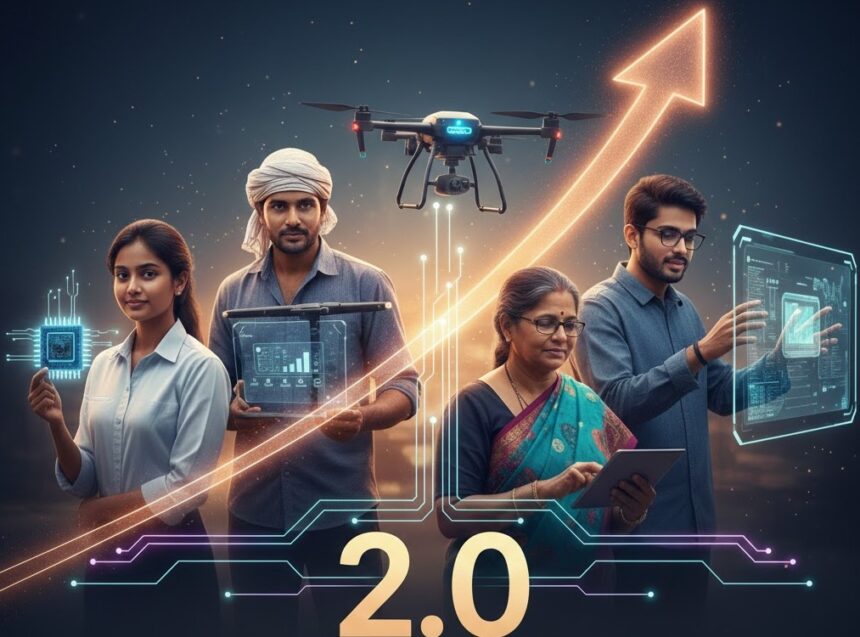
NEW DELHI, February 8, 2026: As the calendar flips into the second decade of the ambitious startup India journey, the government has unveiled a sweeping overhaul of its recognition framework. Announced this February 2026, the new rules represent more than just a paperwork update; they signal a fundamental shift in how India views its “unicorns” and “soonicorns”, moving away from just helping them start, to helping them stay ahead globally.
The Department for Promotion of Industry and Internal Trade (DPIIT) has essentially “raised the roof” for entrepreneurs. By doubling the turnover limit for general startup recognition from ₹100 crore to ₹200 crore, the government is acknowledging a new reality: high-growth companies shouldn’t be “punished” for being successful.
Previously, many startups hit a “bottleneck” where their own revenue growth disqualified them from the very tax holidays and regulatory breaks they needed to scale further. Now, companies can continue to enjoy Section 80-IAC tax benefits and angel tax exemptions even as they approach a more mature commercial stage.
Deep Tech and Cooperatives: The New Pillars of Startup India Innovation
Perhaps the most significant “upgrade” in this 2026 framework is the dedicated focus on Deep Tech. Recognizing that building a semiconductor chip or a quantum computer takes much longer than building an app, the government has extended the eligibility age for these ventures to 20 years.
Furthermore, Deep Tech firms can now have a turnover of up to ₹300 crore while maintaining their startup status. This acknowledges the massive capital intensity and the “non-linear” path of research-heavy businesses. The focus has shifted from “How old is the company?” to “How mature is the technology?” using the Technology Readiness Levels (TRL) as a primary yardstick.
Startup India 2026: Turnover Limits Doubled to 200 Crore
In a move that democratizes the startup India ecosystem, the government has also opened its doors to Cooperative Societies. By allowing Multi-State and State-level cooperatives to register as startups, the framework is taking innovation to the grassroot levels. This is expected to be a game-changer for:
- Agriculture: Enabling local farmer groups to adopt high-tech irrigation and processing.
- Rural Manufacturing: Helping community-led enterprises access the Government e-Marketplace (GeM).
- Women-led SHGs: Providing Self-Help Groups with the same mentorship and credit lines usually reserved for tech founders in Bengaluru or Gurgaon.
The Union Budget 2026-27 has further sweetened the deal, offering customs duty exemptions on critical minerals and healthcare inputs. When combined with the new ₹1 lakh crore Research Development and Innovation Fund (RDIF), it’s clear the goal is to make “Made in India” synonymous with “Invented in India.”
Ten years ago, Startup India was about creating a culture of entrepreneurship. Today, it’s about ensuring that culture has the stamina to go the distance.