February 24, 2026: Canva’s latest twin acquisitions signal a deeper push into professional creative production and performance-driven marketing, as the company moves beyond design templates toward a broader creative operating system. By bringing animation startup Cavalry and ad-technology venture Mango AI into its fold, Canva is tightening the link between content creation and measurable campaign outcomes.
The addition of UK-based Cavalry reflects Canva’s growing focus on advanced creative workflows. Known for its 2D motion animation tools across advertising, gaming, and generative art, Cavalry fills a gap that had remained in Canva’s professional suite. Since integrating the Affinity design platform into its ecosystem last year, Canva has steadily expanded beyond static visuals, and motion design appears to be the next logical layer.
The move suggests Canva is positioning its professional tools not as separate products but as parts of a unified system. Photo editing, vector work, layout design, and now animation are being brought together to appeal to creators who want end-to-end production within a single environment. With millions of downloads recorded after Affinity became free to users, Canva seems to be leveraging accessibility as a way to expand its professional audience rather than compete purely on price or features.
Canva’s latest deals show a shift from design platform to growth stack
Alongside creative tooling, the Mango AI acquisition reveals Canva’s increasing emphasis on performance analytics. The stealth startup specialised in reinforcement learning systems aimed at improving video advertising outcomes, an area where design platforms have traditionally relied on external marketing software. By integrating ad optimisation directly into its ecosystem, Canva is moving closer to becoming a growth platform rather than just a design tool.
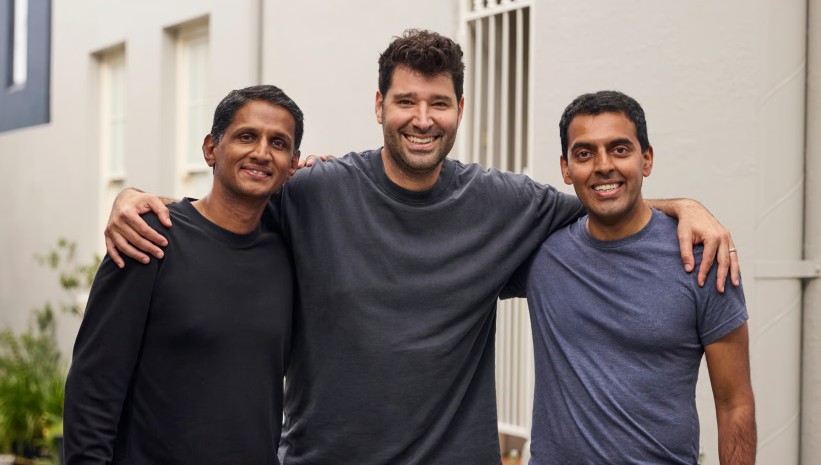
Leadership changes tied to the acquisition hint at how central algorithms and measurement may become to Canva’s roadmap. Mango AI’s founders, both with data science backgrounds shaped by large-scale streaming and gaming platforms, are expected to drive experimentation around campaign insights, automation, and predictive creative performance.
The dual deals also fit into a broader pattern. Over the past year, Canva has added marketing intelligence capabilities and launched growth-focused tools designed to help brands create assets and track results without leaving its platform. The Cavalry and Mango AI integrations extend that strategy into motion design and performance optimisation — two areas increasingly linked as brands shift budgets toward video-first campaigns.
With hundreds of millions of users and billions in annualised revenue, Canva is now navigating a different phase of expansion. Rather than chasing incremental design features, the company appears to be building a closed loop where ideas are created, distributed, measured, and refined in one place. If successful, the acquisitions could reshape how marketers approach creative production, not as a series of tools, but as a continuous workflow driven by data and motion-led storytelling.