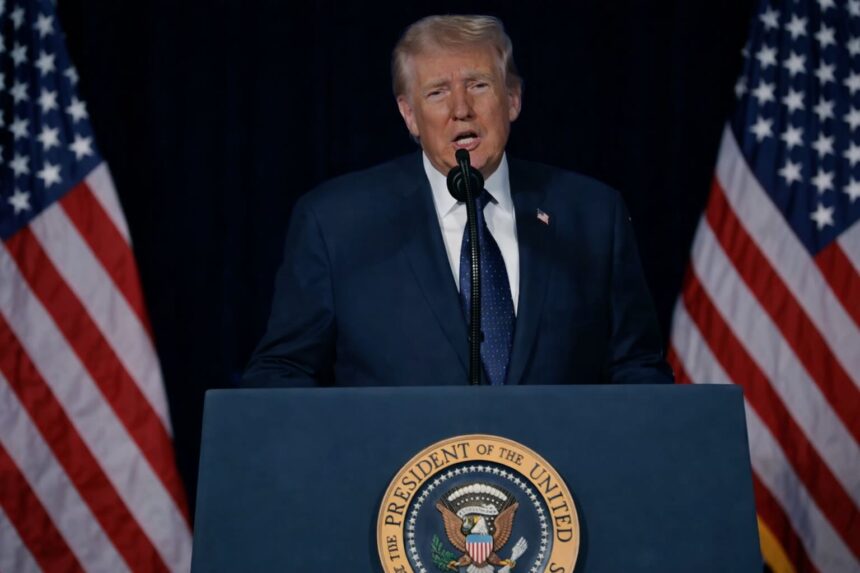
Tuesday, May 19, 2026: US President Donald Trump has once again jolted global headlines, this time by abruptly halting a planned military strike on Iran. In a post on Truth Social, Trump revealed that leaders from Qatar, Saudi Arabia, and the UAE urged him to pause the assault, pushing instead for “serious negotiations.”
The strike, scheduled for Tuesday, was shelved after appeals from Emir Tamim bin Hamad Al Thani, Crown Prince Mohammed bin Salman, and President Mohamed bin Zayed. Trump declared that a deal “acceptable to the United States and countries across West Asia” could soon be within reach, one designed to prevent Iran from acquiring nuclear weapons.
President Donald Trump’s decision to delay a military strike on Iran underscores the volatile mix of diplomacy and brinkmanship shaping West Asia. While Gulf leaders pressed for negotiations, the U.S. retains a “locked and loaded” posture, leaving global energy markets and inflationary pressures hanging in the balance.
Flip-Flop Diplomacy: Allies Push Talks, Trump Threatens Force
Yet, in classic Trump fashion, the message carried a sharp edge: the US military remains “locked and loaded,” ready to unleash a large-scale assault at short notice if talks collapse. Defense Secretary Pete Hegseth and General Daniel Caine have been instructed to keep forces on immediate standby.
Meanwhile, Iran, through Pakistani mediators, claims to have responded to some US concerns. But Tehran continues to flex its grip over the Strait of Hormuz, the artery for nearly 20% of global oil and LNG shipments , tightening the screws on inflation and energy costs worldwide. For developing nations, petroleum products are becoming dearer by the day, fueling economic anxiety as Trump’s unpredictable maneuvers dominate the global stage.
Global Economic Implications
- Energy Prices: Any disruption in the Strait of Hormuz could send oil prices soaring. For developing nations like India, already grappling with inflation, rising petroleum costs would intensify economic strain.
- Inflationary Pressures: With inflation trending upward globally, Trump’s unpredictable maneuvers add uncertainty to markets, complicating monetary policy for central banks in Asia and beyond.
- Strategic Vulnerability: Countries dependent on Gulf energy imports face heightened risk. India, for instance, sources nearly 60% of its crude oil from the Middle East, making stability in the region critical.
Risks & Trade-Offs
- Risk of Miscalculation: Trump’s rhetoric (“locked and loaded”) could trigger unintended escalation if Iran misreads U.S. intentions.
- Economic Fallout: Even without strikes, the mere threat destabilizes oil markets, worsening inflation in energy-importing nations.
- Diplomatic Strain: Gulf leaders’ request highlights diverging priorities — they seek stability, while Trump emphasizes leverage.