July 25, 2026: There’s a simple question that stays with you after watching Jana Nayagan: is this trying to be a good film or a grand farewell for one of Tamil cinema’s biggest stars?
The answer becomes clear quite early. The film isn’t interested in taking risks with its story. Instead, it leans heavily into everything that has made Vijay a crowd favourite over the years—larger-than-life action, punch dialogues, emotional speeches, and moments that are tailor-made for theatres filled with cheering fans.
That’s not necessarily a bad thing. Commercial entertainers are meant to celebrate their heroes. The problem is that Jana Nayagan spends so much time celebrating Vijay that it forgets to build an equally compelling story around him.
The film follows Vijay as a former police officer drawn back into a dangerous conflict involving politics, revenge, and a young girl carrying emotional scars from her past. The premise has enough potential to deliver an engaging action drama, and the first half keeps things moving with a few interesting reveals and decent emotional moments.
But once the interval is over, the screenplay slips into familiar territory.
The mystery that drives the first half disappears sooner than expected, and what follows is a long stretch of predictable storytelling. The confrontations become repetitive, the emotional scenes lose their impact, and the action sequences keep getting bigger without making the story any stronger. You know exactly where things are headed long before the film reaches its climax.
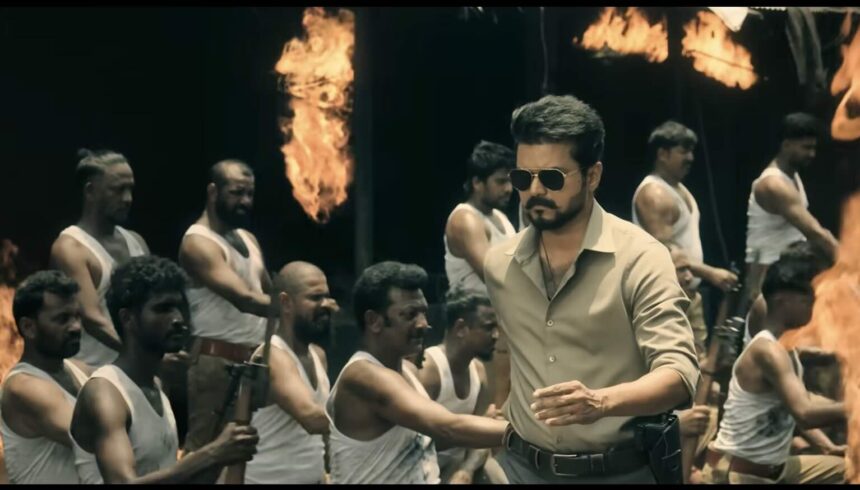
Vijay is, without doubt, the film’s biggest strength. He looks comfortable in every frame and effortlessly carries the larger-than-life persona that his fans love. His entry scenes, stylish mannerisms, action blocks, and trademark one-liners are sure to draw loud cheers in theatres. Even in scenes where the screenplay slows down, his screen presence keeps things watchable.
But charisma alone cannot carry a three-hour film.
Director H. Vinoth appears more interested in creating moments than telling a complete story. Several scenes exist purely to elevate the hero rather than move the narrative forward. As a result, Jana Nayagan often feels like a collection of fan-service moments stitched together instead of a tightly written action drama.
The supporting cast deserved much better.
Prakash Raj, an actor known for commanding the screen, gets very little to work with. Revathy brings warmth to her role but disappears for long stretches. Priyamani’s character hints at depth but is never explored properly. Pooja Hegde, despite sharing good chemistry with Vijay, is once again limited to a role that could have offered much more. Even Gautham Vasudev Menon, who leaves a lasting impression in many of his acting roles, barely gets enough screen time to register.
Bobby Deol fares better than the rest. He brings intensity whenever he appears, and his presence gives the film some much-needed tension. However, even his character eventually falls into the familiar pattern of existing mainly to make the hero look invincible.
One of the film’s better performances comes from Mamitha Baiju. Her character forms the emotional backbone of the story, and she handles the vulnerable moments with sincerity. Unfortunately, once the action takes over, her track also moves into the background.
The political messaging is impossible to ignore. Unlike Vijay’s previous films, where social messages stayed within the story, Jana Nayagan places politics at the centre of almost everything. Leadership, governance, women’s empowerment, and communal harmony are recurring themes throughout the film.
There’s nothing wrong with cinema reflecting social or political ideas. Many memorable commercial films have done that successfully. The issue here is balance. The messaging often feels louder than the narrative itself, making several scenes look more like speeches than conversations between characters.
Technically, the film checks most boxes.
Jana Nayagan: Made for Fan Whistles, Not for Everyone
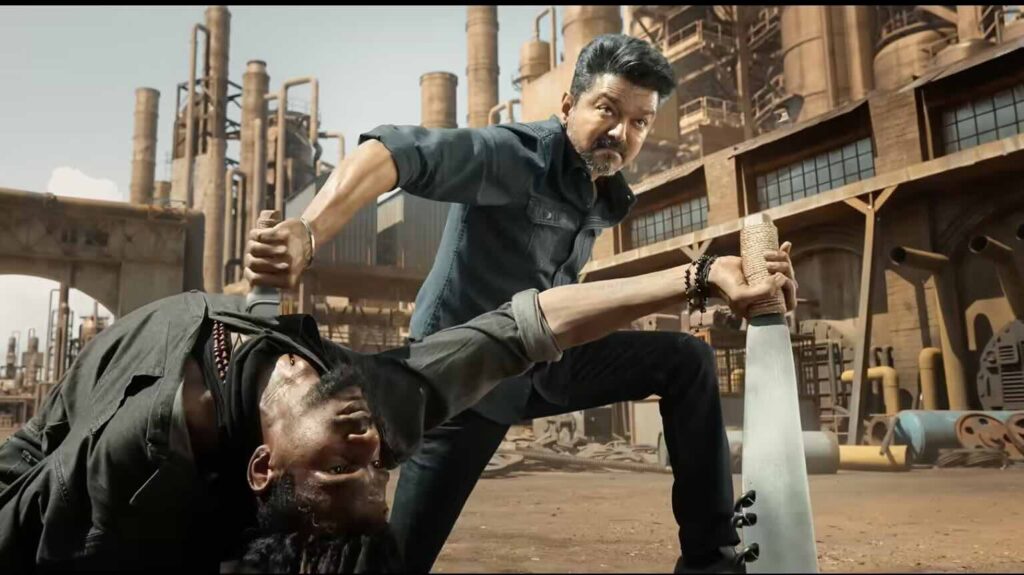
The production values are grand, the cinematography gives Jana Nayagan a polished look, and the background score effectively lifts several mass moments. The action choreography is energetic, although some sequences go on far longer than necessary. The visual effects are decent for the most part but become excessive during the extended climax, which could easily have been trimmed by fifteen or twenty minutes.
The film’s biggest problem is its runtime.
At close to three hours, Jana Nayagan begins to feel stretched. Many scenes repeat information the audience already knows, while others exist simply to create applause moments. A tighter edit would have significantly improved the overall experience.
Commercial entertainers don’t always need complex stories. They simply need engaging storytelling that keeps audiences invested from beginning to end. That’s where Jana Nayagan struggles. It has scale, emotion, action, comedy, music, and a charismatic star, but it never blends these ingredients into a satisfying whole.
For Vijay fans, the film offers plenty to celebrate. Every signature move, dialogue, and heroic moment is designed to create an electric atmosphere inside theatres. Those moments will undoubtedly work with a packed audience.
For everyone else, however, the experience is far less rewarding.
Once the credits roll, it becomes difficult to remember a single standout scene beyond Vijay’s larger-than-life presence. The characters don’t stay with you, the emotional moments don’t linger, and the story doesn’t leave a lasting impression.
Jana Nayagan is a film with enormous ambition but an ordinary screenplay. It succeeds as a celebration of its leading man, but falls short as a memorable cinematic experience.
Rating: 2.5/5