Hyderabad, October 5, 2026: India’s telecom infrastructure is emerging as a potential growth market for battery energy storage, with Cygni Energy Private Limited and Indus Towers Limited signing an MoU to explore energy storage solutions for telecom networks and a proposed Battery Energy Storage System (BESS) manufacturing capacity of up to 1.5 GWh.
The proposed partnership brings together a domestic battery technology and manufacturing company with one of India’s largest telecom infrastructure operators at a time when energy storage is finding applications beyond renewable power integration and grid-scale projects.
For telecom infrastructure providers, battery systems are a critical component of power continuity at tower sites. The scale and geographic spread of telecom networks make energy reliability, backup duration, energy efficiency and lifecycle costs important considerations in infrastructure operations.
The Cygni-Indus Towers initiative is expected to evaluate advanced battery technologies for telecom applications, with a focus on improving reliability, energy efficiency and the sustainability of telecom operations.
The development also highlights the growing importance of application-specific battery solutions in India. Rather than relying on a single battery configuration across sectors, manufacturers are increasingly developing systems suited to different requirements, including telecom, stationary storage and mobility.
Cygni Energy, Indus Towers Bet on Manufacturing Scale to Meet Telecom’s Storage Needs
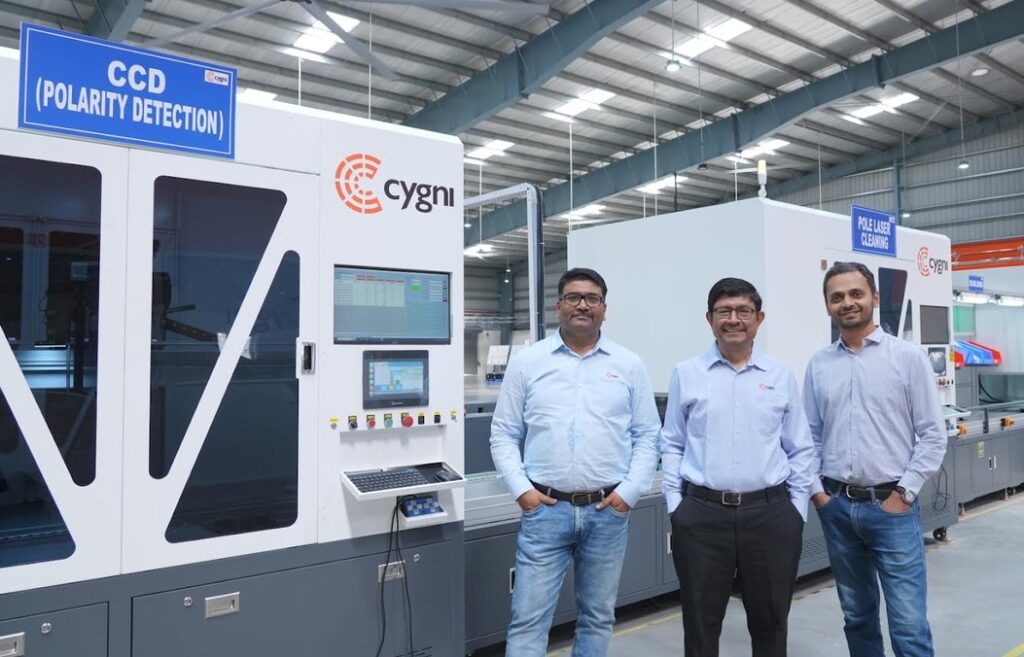
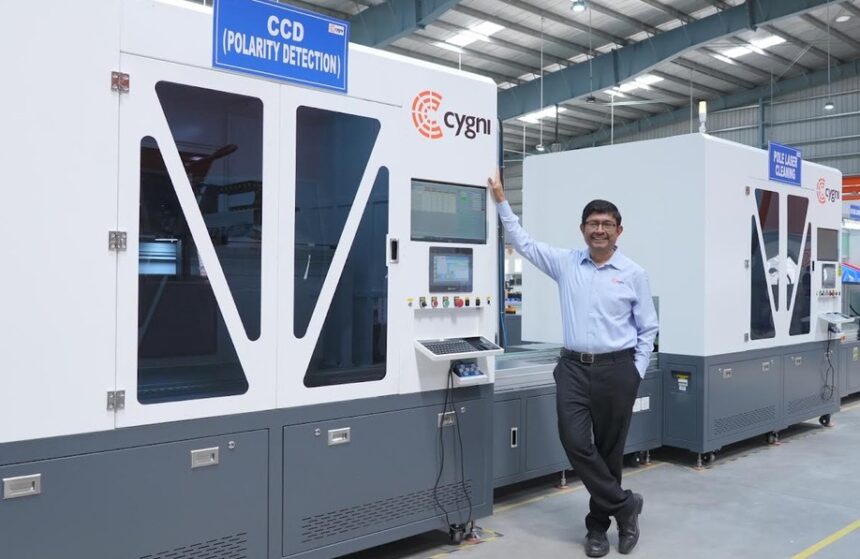
Cygni Energy Founder and CEO Venkat Rajaraman said the company intends to build capacity of up to 2 GWh and develop a product portfolio that can move from its current 100Ah solutions to higher-capacity 314Ah systems, alongside emerging battery technologies.
Venkat say “For us, this initiative goes beyond supplying batteries. It is about building the scale, technology capabilities and manufacturing readiness required to support the evolving energy needs of one of the world’s largest passive telecom infrastructure companies. Our ambition is to combine scale, reliability and Indian engineering to create future-ready energy storage solutions that can evolve alongside India’s rapidly expanding digital infrastructure.”
The capacity plans indicate that the company is looking beyond the immediate telecom opportunity and positioning itself for a wider expansion in India’s energy-storage market.
For the domestic BESS ecosystem, the involvement of a major telecom infrastructure company could also help create a reference market for locally engineered storage systems. Large-scale deployments in telecom can provide manufacturers with an opportunity to validate battery performance, management systems and pack-level technologies under demanding operating conditions.
Prof. Ashok Jhunjhunwala, Institute Professor at IIT Madras and Chairman of ITEL Foundation, has emphasised the importance of collaboration between technology institutions, startups, manufacturers and users in advancing battery technologies and manufacturing capabilities in India.
The proposed 1.5 GWh capacity should also be viewed in the context of a broader manufacturing push. India is seeking to develop domestic capabilities across the energy-storage value chain as demand grows from renewable energy, electric mobility, telecom and stationary applications.
For telecom operators, the economics of energy management are becoming increasingly relevant as networks expand and infrastructure remains distributed across urban and remote locations. Storage systems that can improve power reliability while lowering energy-related operating requirements could therefore become an increasingly important investment area.
The Cygni Energy-Indus Towers agreement signals that the BESS opportunity in India is widening. While renewable energy and grid applications remain major drivers of storage demand, telecom infrastructure could provide another sizeable and recurring market for battery manufacturers capable of delivering reliable, scalable and application-specific systems.
The next phase of India’s BESS market may therefore be shaped not only by how much storage the country needs, but also by how effectively domestic manufacturers can develop technologies tailored to the operational requirements of critical infrastructure.