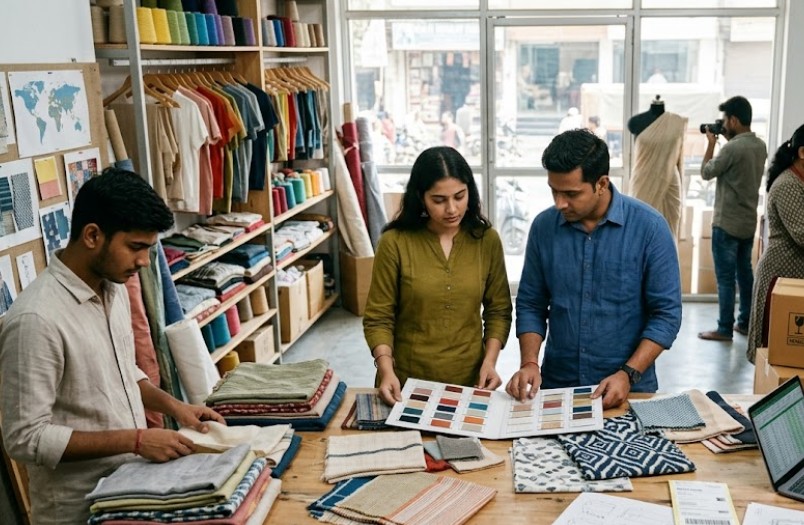
New Delhi, October 19, 2026: More than 4,000 textile startups have been identified by the textiles ministry for support to expand their businesses and prepare for overseas markets over the next three to four years, as the government looks to widen market access and strengthen the sector’s export potential.
The ministry plans to bring these ventures together, help them grow and identify businesses that are ready to enter international markets, a government official said.
“We need to actually create an aggregation of these businesses so that they can act as a multiplier to propel demand, take businesses to the remotest parts of the country and identify those with the potential to enter the export markets in the next three to four years,” the official said.
The proposed initiative will cover startups and small businesses across the textile value chain, including ventures that operate through social media, provided they meet the registration requirements. Businesses registered under the framework of the Department for Promotion of Industry and Internal Trade (DPIIT) will be among those considered.
India Builds Pipeline of Textile Exporters Through Startups
The ministry plans to consult entrepreneurs to understand the challenges they face in expanding operations, accessing markets and preparing for exports. The exercise is expected to help identify the areas where government assistance can make the biggest difference to their growth.
The consultations are likely to begin in late November or early December, followed by a national startup conclave in December. The event is expected to bring textile entrepreneurs together and provide the ministry with a clearer picture of their requirements, the official said.
Eligible ventures may also be able to access existing support under the Startup India initiative. These include the Fund of Funds for Startups and the Credit Guarantee Scheme for Startups, which provide funding support and credit related assistance to qualifying businesses.
Through the initiative, the ministry aims to connect smaller textile businesses with wider markets, encourage expansion beyond local operations and build a stronger pipeline of potential exporters over the coming years.