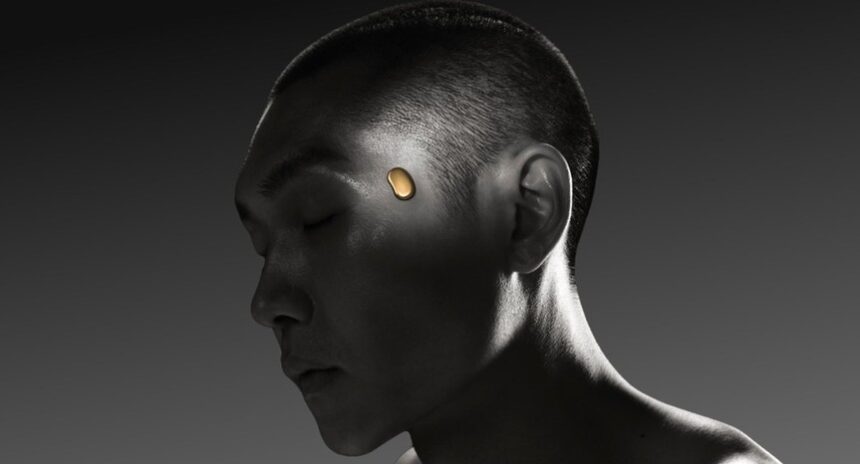
November 6, 2026: Deepinder Goyal’s latest venture, Temple, is attracting attention even before its commercial launch. Priced at Rs 85,000, the wearable promises to monitor physiological signals linked to brain blood flow and other aspects of the body’s functioning. But while Goyal is confident about the technology, questions from medical professionals have put the spotlight on a more important issue: how much scientific evidence supports what the device claims to do?
The Zomato founder has pushed back against doctors who have questioned Temple’s scientific basis, with some critics going as far as calling the product a scam. In a post on X on November 5, Goyal said the company had spent $30 million developing the device, of which $20 million came from his personal funds.
He argued that the investment, the company’s willingness to offer a 14 day return policy and his own reputation were reasons to take the project seriously. He also said Temple was not designed as a quick commercial exercise and that the company was prepared to have its scientific claims independently examined.
However, the size of an investment does not establish the scientific validity of a health technology. Nor does a founder’s confidence necessarily answer questions about what a device can measure, how accurately it does so and whether its readings have practical medical value.
That distinction is at the centre of the debate surrounding Temple.
What does Temple actually measure?
Temple is a wearable device designed to sit near the temple. According to the company’s description, it tracks changes in brain blood flow and entropy, which Goyal has linked to his broader Gravity Ageing Hypothesis.
The hypothesis explores whether gravity’s long term influence on blood circulation could contribute to ageing, particularly in the brain. It is an interesting scientific proposition, but a hypothesis should not be confused with an established medical finding.
There are several questions that need to be answered before consumers can assess the device’s potential. Can Temple reliably measure the biological signals it claims to track? How closely do its readings correspond with established measurement methods? Can the information distinguish meaningful physiological changes from normal variations caused by movement, temperature, exercise or other factors?
Most importantly, can these readings provide useful information about brain health, or are they simply measurements that may help users understand certain bodily patterns?
These are not minor technical details. They determine whether a wearable is a fitness and wellness device or a technology capable of offering clinically meaningful health information.
Why doctors are raising questions about Deepinder Goyal’s Invention ‘Temple’
One of Temple’s most vocal critics has been hepatologist Dr Cyriac Abby Philips, widely known as The Liver Doc. He has questioned whether the device can deliver on its stated objective of measuring brain blood flow and providing the insights suggested by its positioning.
In his response to Goyal, Philips argued that the device’s measurements did not establish that it could monitor brain health as claimed. He also questioned the value proposition of selling a wearable for around $900 if its demonstrated capabilities were limited to more conventional physiological tracking.
The disagreement points to a larger problem in the growing health wearable market. Measuring a biological signal and interpreting what that signal means for an individual’s health are two different things.
A device may be capable of collecting physiological data without being able to diagnose a condition, predict a health risk or guide treatment. Even when a measurement is technically accurate, its clinical usefulness must be established separately.
For consumers, this distinction matters because health related claims can create expectations that go well beyond what a device has actually been tested to deliver.
Goyal promises more scientific validation
Goyal has defended Temple’s development process, arguing that wearable companies have historically introduced products before publishing all their scientific validation studies.
He cited Whoop as an example, pointing out that the company began shipping its fitness band in 2015, while published validation followed later.
Goyal said Temple intended to hold itself to a higher standard, adding that preprints of its research were expected and that further independent studies would follow once the product became available.
A preprint can make research findings available for public examination before formal peer review. However, it has not undergone the same independent scrutiny as a peer reviewed scientific publication. The distinction is particularly important when a product makes claims connected to human health.
Independent validation should ideally involve researchers who have no financial interest in the company, clearly described testing methods, adequate participant numbers and comparisons with established measurement techniques.
For a device making claims about brain related measurements, evidence should also establish how consistently it performs across different individuals and real world conditions.
What should consumers consider before spending Rs 85,000?
Temple’s launch raises questions that extend beyond the founder’s disagreement with doctors. Consumers considering an expensive health wearable should look for evidence rather than relying solely on product demonstrations, promotional material or the reputation of the person behind it.
They should ask whether the company has published its research, whether independent researchers have tested the device and whether its measurements have been compared with accepted clinical methods.
The distinction between wellness monitoring and medical assessment should also be clearly communicated. A wearable that tracks physiological changes should not automatically be considered a substitute for medical tests or professional advice.
Goyal has said Temple offers a 14 day, no questions asked return policy. While that gives buyers an opportunity to evaluate the product, a short trial cannot establish long term accuracy, clinical usefulness or the validity of broader scientific claims.
At Rs 85,000, consumers are entitled to expect transparency about what they are buying, what the technology can reliably measure and what remains experimental.
Temple may eventually demonstrate that its approach offers something valuable to the wearable technology market. But that will depend on the quality of its evidence, not the amount of money invested in its development.
The larger lesson is that innovation in health technology deserves encouragement, but health claims deserve scrutiny. Consumers should not have to choose between believing a founder and believing a critic. They should be able to examine independently verified evidence and make an informed decision.