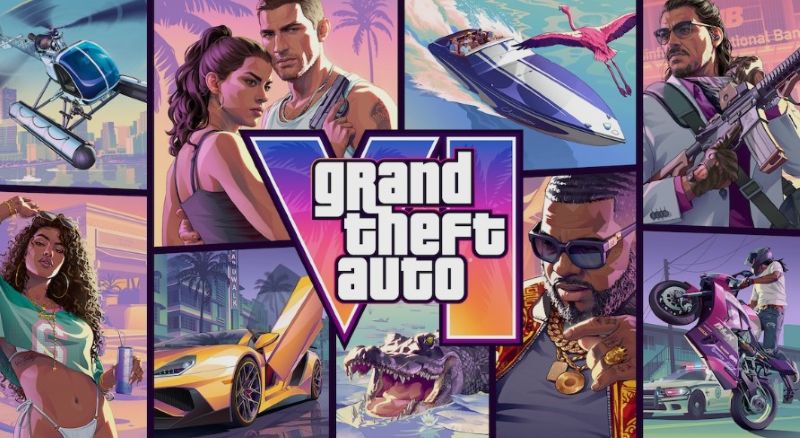
GTA6: November 202, 2026: Beyond the gaming world, the arrival of Grand Theft Auto VI (GTA 6) offers an interesting look at human anticipation, nostalgia, brand longevity and our endless desire to return to experiences that leave a lasting impression.
There are product launches, there are movie premieres, and then there is something like Grand Theft Auto VI. For a video game to keep an entire community waiting for 13 years is quite extraordinary. What makes it even more interesting is that the excitement extends well beyond people who play video games. Even those who have never held a gaming controller have probably come across the conversations, trailers, memes, speculation and almost festive anticipation surrounding GTA 6.
I have largely watched the gaming community from the sidelines. I may not understand every gaming reference, every technical discussion or the excitement around every new feature, but I find the phenomenon around GTA 6 fascinating. There is a much bigger story here than the arrival of another instalment in a popular gaming franchise.
Grand Theft Auto V arrived in 2013. At the time, the world was a very different place. Smartphones were still evolving, social media was finding its feet as a powerful cultural force, and artificial intelligence had yet to become part of everyday conversation.
Thirteen years later, the world has changed considerably. The people who played GTA V as teenagers have grown older. Some are now working professionals, parents and entrepreneurs. A younger generation has grown up discovering the franchise through conversations, videos and online communities.
And yet, the anticipation has survived. That is perhaps the most remarkable part of this story.
GTA 6 Illustrates the business of making people wait
In an age where attention is constantly shifting, keeping a product relevant for more than a decade is an achievement that deserves attention. Most brands spend enormous amounts of money trying to remain visible. They introduce new products, refresh their communication, collaborate with influencers and compete for a few seconds of consumer attention.
Rockstar Games has had an unusual advantage. Its audience has continued to carry the conversation forward. Every trailer became an event. Every glimpse of the fictional world generated discussion. Every delay brought another round of speculation. Online communities kept the conversation alive, often creating their own theories, expectations and interpretations.
The audience became part of the marketing story. There is a lesson here for businesses across industries. A product may attract attention through advertising, but genuine emotional attachment develops over time. People remember experiences, associate them with particular periods of their lives and develop an attachment that can survive years without a new release.
GTA has managed to become more than a game. For many people, it is also a piece of personal history.
We are buying into memories as much as experiences
There is something deeply human about wanting to revisit a familiar experience. Think about how people return to a favourite film, listen to music they grew up with, revisit a holiday destination or reconnect with an old friend. The attraction comes partly from the experience itself and partly from the memories attached to it.
GTA 6 appears to draw on that same emotional connection. The return to Vice City, a fictional world inspired by Miami, gives long-time followers a sense of familiarity while promising a new experience. The introduction of Jason and Lucia as central characters also gives the franchise a fresh narrative direction.
For returning audiences, there is the pleasure of recognition. For new audiences, there is the opportunity to discover what made this world so compelling in the first place. This combination of familiarity and discovery is powerful. It allows a brand to retain its original audience while opening the door to a new generation.
When a video game becomes a cultural event
The release of GTA 6 on November 19, 2026, has demonstrated how far gaming has travelled from being considered a niche form of entertainment. It now occupies a space alongside cinema, music, streaming and other major entertainment industries.
The launch has generated global attention, with midnight celebrations, live streams, extensive online discussions and widespread media coverage. Early reviews have been exceptionally positive, although the full experience will take time to assess as more players spend time with the game.
The new story follows Jason and Lucia through Leonida, a fictional American state, with Vice City at its centre. Rockstar has also built an extensive entertainment ecosystem around the release, including an original soundtrack and a substantial in-game musical experience.
What stands out is the scale of the ambition. This is a company treating a video game as a major cultural production, bringing together storytelling, technology, music, design and audience participation.
It also reflects how gaming has become a shared social experience. People watch others play, discuss characters, exchange opinions and build communities around virtual worlds. One does not necessarily have to play the game to understand the cultural conversation around it.
The expectations problem
There is, however, another side to a 13-year wait. The longer people anticipate something, the more difficult it becomes to satisfy them. Expectations grow, memories become idealised and the product begins to carry a weight that goes beyond its actual features.
For Rockstar, GTA 6 arrives with an enormous responsibility. It has to appeal to people who have followed the franchise for years while convincing a new generation that the wait was worthwhile.
Early critical reactions have been encouraging. Yet the real test of longevity will emerge over months and years, when the initial excitement settles and players decide whether the experience continues to hold their attention.
That is where the distinction between a successful launch and a lasting product becomes important. A launch creates a moment. A great product creates a relationship.
The larger lesson beyond gaming
What I find most interesting about GTA 6 is what it tells us about people. We are constantly looking for the next thing, yet we remain deeply attached to things that have given us memorable experiences. We want novelty, but we also want familiarity. We enjoy discovering something new, while holding on to the comfort of something we already know.
Perhaps this is why the world has been willing to wait so long. For businesses, the lesson is worth thinking about. Longevity cannot always be measured by how frequently a product is refreshed or how aggressively a brand communicates. Sometimes, it comes from creating something so meaningful that people continue to remember it even when there is nothing new to sell them.
GTA 6 has already made its arrival. Whether it becomes the defining entertainment experience of its generation is something time will tell. But one achievement is already evident. A video game has managed to remain part of a global conversation for 13 years, across changing technologies, changing audiences and changing lives.
And perhaps that is the real story.
In a world where everything competes to be the next big thing, the greatest achievement may be creating something people never quite stop looking forward to.