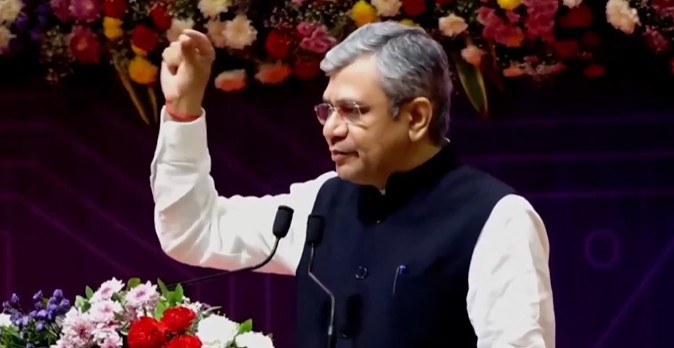
Gujarat, March 3, 2026: India’s semiconductor strategy is moving beyond assembling factories to nurturing the next generation of chip innovators. At the Gujarat Semiconnect Conference 2026, Union Minister Ashwini Vaishnaw emphasized that Semicon 2 will focus on building a design ecosystem and creating opportunities for deep tech startups.
While Semicon 1.0 concentrated on attracting manufacturing plants, with 10 approved and the first now in commercial production, the new phase aims to make India a hub for chip design and intellectual property creation. “The first version got factories; the second version is about creating the next Qualcomm, Broadcom, or Nvidia here in India,” Vaishnaw said.
A critical part of this shift is talent development. The Union Minister Ashwin Vaishnaw highlighted a projected gap of 20 lakh skilled professionals in the semiconductor sector over the coming years. Instead of treating this as a challenge, the government sees it as a chance for students and young engineers to step into high-value roles in design, testing, and validation. Under Semicon 1.0, the target was to train 85,000 engineers in a decade, achieved in just four years. Semicon 2.0 plans to expand training to 500 universities nationwide, offering a continuous pipeline of talent.
Beyond talent, Vaishnaw stressed the importance of strengthening the supporting ecosystem: materials, equipment, testing, and validation facilities must grow alongside design capabilities to sustain a 20-year vision for India’s semiconductor independence.
This phase of Semicon Mission highlights a broader lesson: building an industry is not just about hardware or factories, it’s about cultivating human capital and innovation infrastructure. By focusing on design and talent, India is signaling that its semiconductor ambitions are about long-term leadership, not just short-term production.