Saturday, March 7, 2026: In a striking demonstration of strategic pragmatism, the United States Treasury Department has issued a temporary, 30-day waiver, enabling Indian refiners to purchase Russian crude oil already in transit in Southern Asian waters. This seemingly minor bureaucratic action, announced amidst the escalating U.S.-Israel conflict with Iran, reveals a complex interplay of energy security, geopolitical alliances, and the intricate balancing act of global power dynamics.
At its core is a notable endorsement from a Trump administration aide, who lauded India as “good actors,” a sentiment reflecting Washington’s evolving calculations in a volatile world.
This development centers on a highly specific, time-bound authorization. Effective March 5, 2026, any Russian Federation-origin crude oil or petroleum products loaded onto vessels and destined for India are temporarily exempt from certain U.S. prohibitions. This general license from the Treasury Department is valid until April 4, 2026, explicitly permitting the sale, delivery, or offloading of these particular cargoes at Indian ports. It represents a precise policy intervention designed to address an acute, short-term need without fundamentally altering broader geopolitical stances.
Crucially, the waiver does not extend to future transactions of Russian oil beyond this narrow window, nor does it, under any circumstances, authorize dealings involving Iran or Iranian-origin goods. This clear distinction highlights the tight parameters within which Washington operates, aiming to mitigate one crisis without inadvertently empowering another adversary.
Decoding the “Good Actors” US Narrative: India’s Geopolitical Balancing Act
The comment from a Trump administration official, praising India as “good actors,” offers a fascinating insight into New Delhi’s nuanced perception within Washington’s corridors of power. This commendation stems from India’s previous decision, reportedly under U.S. pressure, to cease direct purchases of sanctioned Russian oil and instead increase imports of American crude. This move was a significant concession, demonstrating India’s willingness to align, to a degree, with U.S. strategic objectives despite its longstanding historical ties and energy needs.
However, the “good actors” label also implicitly acknowledges India’s persistent challenge: securing affordable energy for its burgeoning economy. New Delhi’s foreign policy has long been characterized by strategic autonomy, navigating complex relationships with major global powers. The initial imposition of 25% punitive tariffs on India for buying Russian oil highlighted the tension inherent in this autonomy when it clashed with U.S. sanctions policy.
The current waiver, therefore, is not merely a concession but a recognition of India’s pivotal role in global energy markets and its critical importance as a strategic partner to the U.S. It represents a pragmatic acknowledgment that compelling India to completely abandon Russian energy during a global supply crunch could have unintended, adverse consequences, potentially destabilizing a key relationship and global energy prices.
Supply Shock Mitigation: The Strategic Rationale Behind Floating Crude Release
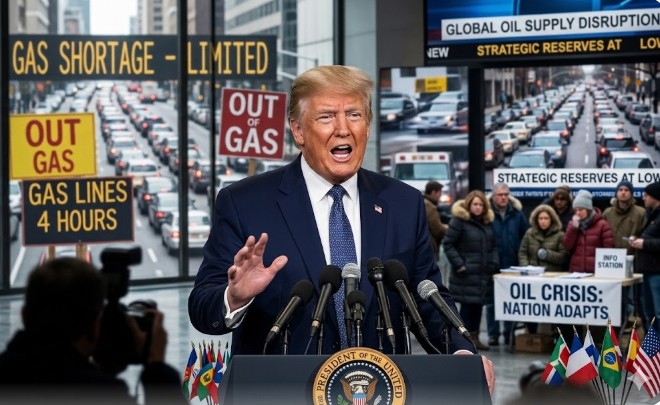
The primary driver behind this sudden policy shift is the escalating U.S.-Israel conflict against Iran in the West Asia region. This conflict has heightened fears of disruptions to global oil supplies, particularly those transiting the Strait of Hormuz, a critical chokepoint for a significant portion of the world’s crude oil. With these anxieties driving up oil prices, the U.S. faces the imperative to rapidly inject supply into the market.
Treasury Secretary Scott Bessent and Energy Secretary Chris Wright have explicitly stated that the waiver is a “short-term measure to help keep oil prices down.” The particular brilliance of this strategy lies in targeting Russian crude “already on the water” – essentially, oil stranded due to sanctions and market hesitancy. By allowing Indian refiners to process these “floating barrels,” the U.S. is not merely increasing supply but doing so with remarkable speed. This relieves pressure on other global refiners, who would otherwise be competing intensely for alternative, non-sanctioned sources. It’s a clever tactical move to leverage existing, albeit dormant, supply chains without encouraging fresh Russian exports.
The Policy Pendulum: Delineating Short-Term Relief from Long-Term Sanctions Stance
It is crucial to understand that this waiver does not signal a softening of Washington’s overall stance against Moscow or a wholesale reversal of its sanctions regime. U.S. officials have been at pains to stress that this is “no change in policy towards Russia” and a “very brief change in policy just to keep oil prices down.” The waiver is deliberately designed to be short-term and to target only those cargoes already in transit, minimizing any significant new financial benefit to the Russian government from fresh transactions.
The broader punitive tariffs imposed on India for its previous Russian oil purchases were lifted after New Delhi committed to stopping imports from Moscow and increasing its purchases of American energy products. This waiver, therefore, stands as an anomalous, temporary exception, triggered by an entirely separate geopolitical crisis. The U.S. strategy appears to be a delicate balance: maintaining pressure on Russia through sanctions while simultaneously preventing a complete meltdown of global energy markets due to the West Asia conflict, which could undermine global economic stability and, by extension, the effectiveness of other sanctions.
Global Energy Chess: Implications for Market Competition and Strategic Partnerships
The implications of this waiver ripple across the global energy chessboard. For India, it provides much-needed, albeit temporary, relief, allowing its refiners access to relatively cheaper crude at a time of heightened global uncertainty. This bolsters India’s energy security and helps manage domestic inflation, a key concern for any government.
For the U.S., it demonstrates a flexible, crisis-responsive foreign policy, capable of making pragmatic adjustments to address immediate economic and strategic threats. By encouraging India to absorb the floating Russian crude, the U.S. effectively prevents a scramble for alternative supplies that could pit allies against each other and further inflate prices. This move subtly reinforces the U.S.-India strategic partnership, showcasing Washington’s willingness to provide practical solutions to its partners, even when navigating complex sanction landscapes.
Ultimately, this temporary waiver is a testament to the dynamic nature of geopolitics in 2026. It underscores how the U.S., caught between the strategic imperatives of sanctioning Russia and mitigating the economic fallout of the Iran-Israel conflict, is willing to engage in precise, short-term policy adjustments. The “good actors” endorsement for India is not just a compliment but a recognition of New Delhi’s growing influence and its indispensable role in the delicate balancing act of global energy security and geopolitical stability.