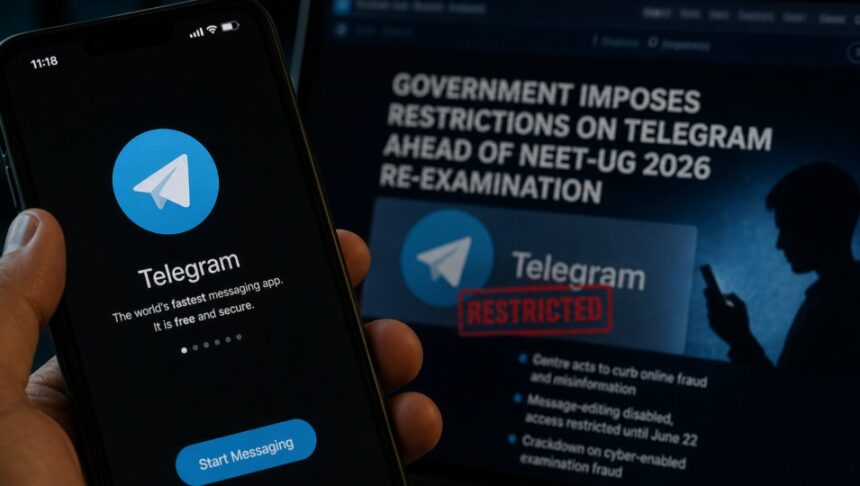
Tuesday, June 16, 2026: In a far reaching action aimed at protecting the integrity of one of India’s largest entrance examinations, the Centre has imposed temporary restrictions on Telegram ahead of the NEET-UG 2026 re-examination, as authorities intensify efforts to dismantle online fraud networks targeting students.
The decision follows concerns raised by the National Testing Agency (NTA), which said organised groups were allegedly using messaging platforms to spread misinformation, create fabricated evidence of question paper leaks and exploit anxious candidates through fraudulent schemes.
Under the temporary measures, access to Telegram in India will remain restricted until June 22, while the platform’s message-editing feature has been disabled for a longer period to prevent the manipulation of posts linked to examination-related claims.
Officials say the move is not merely about restricting a platform but about safeguarding public trust in a national examination that determines the academic future of lakhs of aspiring medical students. Authorities believe that curbing the circulation of misleading content during the examination period will help reduce panic, prevent fraud and ensure a level playing field for genuine candidates.
According to the NTA, investigators found that some channels allegedly edited previously published posts after examinations had concluded, replacing older attachments with question papers while retaining original timestamps. Such content was then circulated as purported proof of advance paper leaks, triggering confusion among students and parents.
The government’s intervention forms part of a broader crackdown on cyber-enabled examination fraud. Working alongside the Indian Cyber Crime Coordination Centre (I4C), authorities have reportedly identified and removed multiple channels, groups and automated bots that were promoting false claims of access to NEET question papers.
Telegram Under Watch as NEET Re-Exam Nears
Law enforcement agencies across states have also stepped up action. Recent investigations uncovered networks allegedly promising examination papers in exchange for payments, exposing what officials describe as a growing ecosystem of digital scams built around high-stakes competitive exams.
Education experts note that the challenge facing examination authorities has evolved beyond physical security at examination centres. The spread of misinformation through digital platforms like TELEGRAM now poses a parallel threat capable of undermining confidence in examination systems even when no actual breach has occurred.
The latest measures on TELEGRAM reflect a wider shift toward protecting examinations from both traditional malpractice and emerging cyber risks. Officials argue that preserving credibility is as important as preventing cheating, particularly in an era where manipulated content can spread rapidly and influence public perception within hours.
The NTA has reiterated that the NEET-UG 2026 re-examination will proceed as scheduled on June 21 and has urged candidates to rely only on official communications for updates. Students have also been advised to report suspicious messages, claims of paper leaks and demands for money to cybercrime authorities.
For millions of aspirants, the focus now returns to the examination hall. For regulators, the episode highlights a growing reality: securing the future of competitive examinations increasingly requires vigilance not only offline, but across the digital landscape as well.