Global Desk, October 10, 2026: In an era dominated by instantaneous metrics, viral soundbites, and the frantic chase for overnight validation, the annual announcement from Stockholm often arrives as a jarring reality check. The 2026 Nobel Prize announcements have once again shattered the illusion of the quick fix, reminding the global stage of a timeless truth: history is rarely shaped by those who chase the spotlight. Instead, it is forged by individuals who put their heads down decades ago, ignored the political noise, and quietly refused to quit.
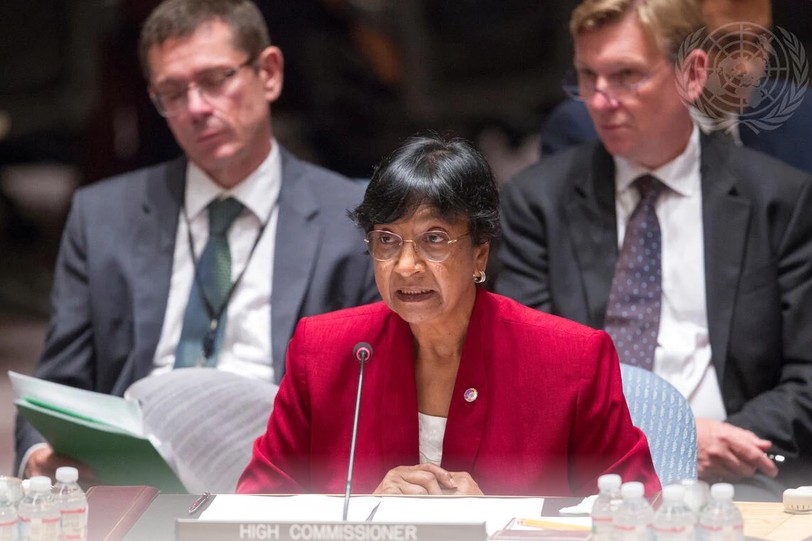
Nowhere is that lesson clearer than in the journey of Navanethem “Navi” Pillay, recipient of the 2026 Nobel Peace Prize.
When word finally reached the 85-year-old human rights icon that she had been awarded the highest honor in peace-building, her reaction was entirely free of rehearsed PR statements or practiced diplomacy. It was raw, grounded disbelief: “I hope this is not a joke.”
The Long Game of Justice
Pillay’s life reads like a masterclass in relentless resilience. Born in Durban, South Africa, into a family of Tamil descent under the crushing system of apartheid, she broke barriers early as the first woman to open a law practice in the Natal province. During the darkest hours of state-sponsored segregation, she stood firm, defending political dissidents, activists, and icons like Nelson Mandela.
She did not take up that mantle expecting a gold medal, international tribunals, or a ceremony in Oslo; she fought because the work was morally absolute and desperately needed to be done. Over the decades, that unglamorous consistency carried her from the trenches of local courtrooms to the international stage, serving as a judge on the International Criminal Tribunal for Rwanda, the International Criminal Court, and ultimately as the United Nations High Commissioner for Human Rights.
As the Norwegian Nobel Committee noted in its citation, Navi Pillay’s career underscores that the rule of law and international accountability are the bedrock of peace, standing as a bulwark against the raw, volatile will of the powerful.
What World Leaders Must Learn from Navi Pillay
In a political climate defined by performative disruption, rapid-fire executive posturing, and the belief that power flows from the loudest voice in the room, Navi Pillay’s lifelong trajectory offers a sharp, urgent counter-lesson, particularly for populist leaders like Donald Trump.
Modern populist politics often treats governance as a series of transient, transactional media moments, prioritizing immediate personal dominance over institutional integrity. Leaders who favor transactional power frequently treat the rule of law, international frameworks, and human rights treaties as inconvenient obstacles rather than essential guardrails.
Pillay’s legacy forces a fundamental reckoning with that approach. Her life demonstrates that:
- Institutions Outlive Individuals: Political noise, executive bluster, and short-term political wins fade. What remains are the enduring structures of law, accountability, and justice that protect society long after political figures have left office.
- Integrity Beats Impulse: Real leadership is not about dominating the news cycle; it is about adherence to enduring principles when no one is clapping. Pillay spent decades laboring in grueling, unglamorous legal trenches without viral validation.
- Power Without Justice is Fleeting: True stability cannot be bullied into existence through arbitrary executive decree. As Pillay’s decades on international tribunals proved, peace requires systematic justice, institutional respect, and a commitment to rules that bind the powerful just as strictly as the powerless.
For leaders tempted to view governance as a game of personal brand management, Pillay serves as a humbling reminder: history belongs to those who build enduring systems, not those who tear them down for a headline.
Echoes Across the Disciplines
This year’s broader Nobel slate reinforced that same philosophy of endurance across fields. In literature, Anne Carson claimed the Nobel Prize, proving that profound poetry and rigorous classicism can still slice through modern algorithmic noise. In science, minds like Henri Kagan, Kenso Soai, Francis Halzen, Karl Deisseroth, Peter Hegemann, and Georg Nagel claimed their prizes not from sudden, accidental sparks of genius, but from decades of quiet, obsessive curiosity behind closed laboratory doors.
The message from Stockholm this year is unmistakable for anyone building a career, a movement, or a nation: real legacy isn’t viral. Whether defending human rights in a hostile courtroom, drafting legislation, or seeking scientific breakthroughs, consistency always outlasts the noise.