November 19, 2026: PM Modi on Thursday challenged India’s corporate leaders to move beyond promises and take greater responsibility for the country’s economic ambitions, questioning their performance on manufacturing, job creation, employee wages and product quality.
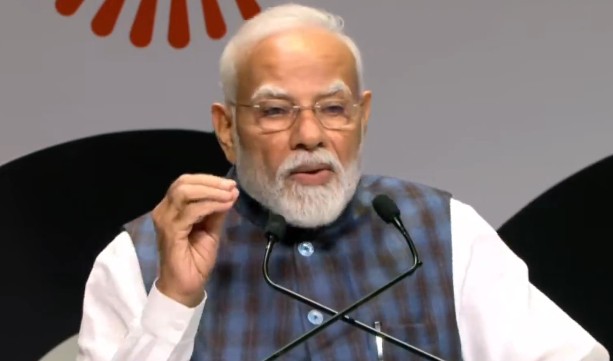
Addressing the inaugural session of the Federation of Indian Chambers of Commerce and Industry (FICCI) Annual General Meeting in New Delhi, PM Narendra Modi said the private sector had yet to make meaningful progress towards building a self reliant manufacturing economy, despite the idea being promoted for nearly a century.
Invoking Mahatma Gandhi’s call for Swadeshi in 1930, the Prime Minister questioned why Indian industry was still being urged to strengthen domestic manufacturing and reduce dependence on imports.
He told business leaders that the country’s push for self reliance should not remain limited to government programmes and policy announcements. Industry, he said, must demonstrate greater commitment through investment, production and innovation.
PM Modi Questions Industry’s Commitment to Make in India
Modi also questioned whether companies had translated the government’s tax relief measures into tangible benefits for employees. Referring to the reduction in corporate tax rates to 22% and income tax relief for individuals earning up to ₹12 lakh annually, he said businesses had continued to seek additional concessions without doing enough for their workforce.
The Prime Minister challenged industry representatives to explain whether the tax benefits had resulted in higher salaries or more employment opportunities.
His remarks put the spotlight on a wider concern surrounding India’s economic growth: whether the gains from improved business conditions are reaching ordinary workers through better wages and more jobs.
Product quality was another area where PM Modi expressed dissatisfaction. He questioned the long standing practice of Indian manufacturers reserving their best products for international markets while selling comparatively lower quality goods to domestic consumers.
With a population of 1.4 billion, India represents one of the world’s largest consumer markets. Modi said businesses should stop treating domestic demand as guaranteed and recognise that Indian customers deserve the same standards of quality offered to buyers overseas.
He argued that the distinction between products made for export and those sold within India reflected a mindset that needed to change. Improving domestic product standards, he indicated, should become an important part of the country’s manufacturing ambitions.
The Prime Minister also raised concerns about the private sector’s apparent lack of preparation to benefit from India’s expanding network of Free Trade Agreements (FTAs).
Describing the trade agreements as a major opportunity for Indian businesses, Modi said access to international markets would mean little unless companies developed clear strategies to increase exports, improve competitiveness and expand their global presence.
He questioned whether industry associations such as FICCI had held detailed discussions on how businesses could capitalise on the agreements and prepare for greater competition in international markets.
Modi’s criticism came alongside his assessment of India’s broader economic progress. He highlighted the country’s transition from being counted among the world’s ‘Fragile Five’ economies to becoming the fastest growing major economy.
He also pointed to rising per capita income and international recognition of India’s efforts to reduce poverty as indicators of the economy’s changing position.
However, his address carried a clear message for corporate India: economic growth and government support alone cannot deliver the country’s ambitions. Businesses must contribute through stronger manufacturing, better employment opportunities, higher wages, improved product standards and a more proactive approach to global trade.
The address placed the responsibility for the next phase of India’s economic transformation firmly on the private sector, with PM Modi challenging industry leaders to turn the opportunities created by policy changes and trade agreements into measurable results.