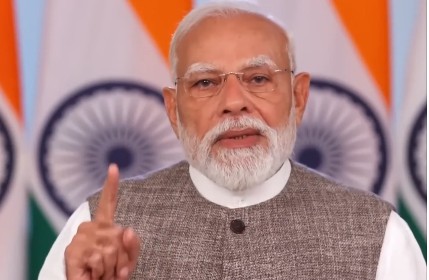
November 29, 2026: Prime Minister Narendra Modi has Renewed his Push for Women’s Representation, Says it is Time for Action. For millions of Indian women, greater representation in decision-making bodies is about more than securing seats in Parliament or state assemblies. It is about having a stronger voice in decisions that shape their lives, opportunities and futures. Prime Minister Narendra Modi has now reiterated his call for action, describing the Nari Shakti Vandan amendment as an urgent national priority.
In a video message shared on X, Modi said the effort to increase women’s participation in public life had continued for decades and that he had been associated with the cause for years. He maintained that his government’s commitment to women’s empowerment remained firm, adding that the issue should rise above political differences.
The Prime Minister also criticised what he described as the prioritisation of party interests over national interest. According to him, when political considerations take precedence, women and the country ultimately bear the consequences.
Calling the Nari Shakti Vandan amendment the need of the hour, Modi said the commitment to women’s empowerment must be fulfilled in the interest of half the country’s population and India’s future.
Modi Renews Push for Women’s Representation, Says Time for Action
At the heart of the debate is a larger question: how much space do women have in India’s political decision-making process?
Greater representation could give women a more direct role in shaping policies on education, healthcare, employment, safety, economic opportunities and social welfare. It could also bring more diverse experiences into legislative discussions and make elected institutions more representative of the people they serve.
For women aspiring to enter politics, stronger representation could open doors in a field where opportunities and access to leadership have historically remained unequal. At the community level, it could also encourage more women to participate in public affairs and consider political leadership as a realistic possibility.
However, representation alone cannot guarantee meaningful change. The impact will depend on how effectively the proposed measures are implemented, whether women representatives receive genuine decision-making authority and whether political parties create an environment that supports their participation.
A political commitment with a larger question
Modi’s latest remarks place the spotlight back on the long-running demand for greater women’s representation in legislative bodies. While political parties may differ over the timing, implementation and broader implications of the amendment, the underlying question concerns the role women should have in shaping the country’s future.
By linking the amendment to national interest, the Prime Minister Modi has sought to present women’s political participation as more than a political promise. His message also puts pressure on political stakeholders to demonstrate whether their support for women’s empowerment can translate into concrete action.
For women across the country, the significance of the debate will ultimately be measured not by political statements but by whether they get a greater say in the decisions that affect their everyday lives.
The challenge now is to turn decades of discussion and promises into meaningful political representation.