India-US Trade Deal 2026 update: India and the U.S. have made significant progress in their ongoing trade negotiations, with a deal on the horizon that promises to bring economic benefits for both nations. According to India’s Union Minister of Commerce and Industry, Piyush Goyal, the trade agreement is nearing completion, with final details set to be revealed shortly.
Key sectors such as agriculture and dairy, which were considered sensitive, have been explicitly excluded from the deal to protect local interests. The announcement has been met with positive reactions from various industries, as well as a boost in the stock market and a rally in the rupee.
Key Highlights of the India-U.S. Trade Deal
- Tariff Reductions on Indian Goods
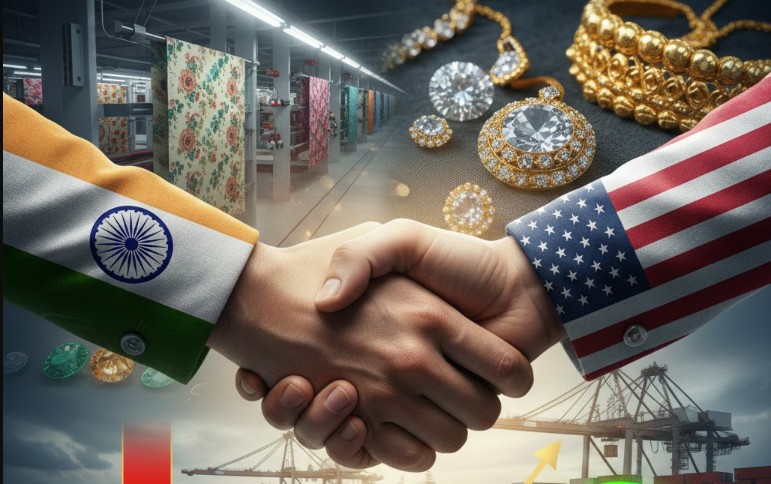
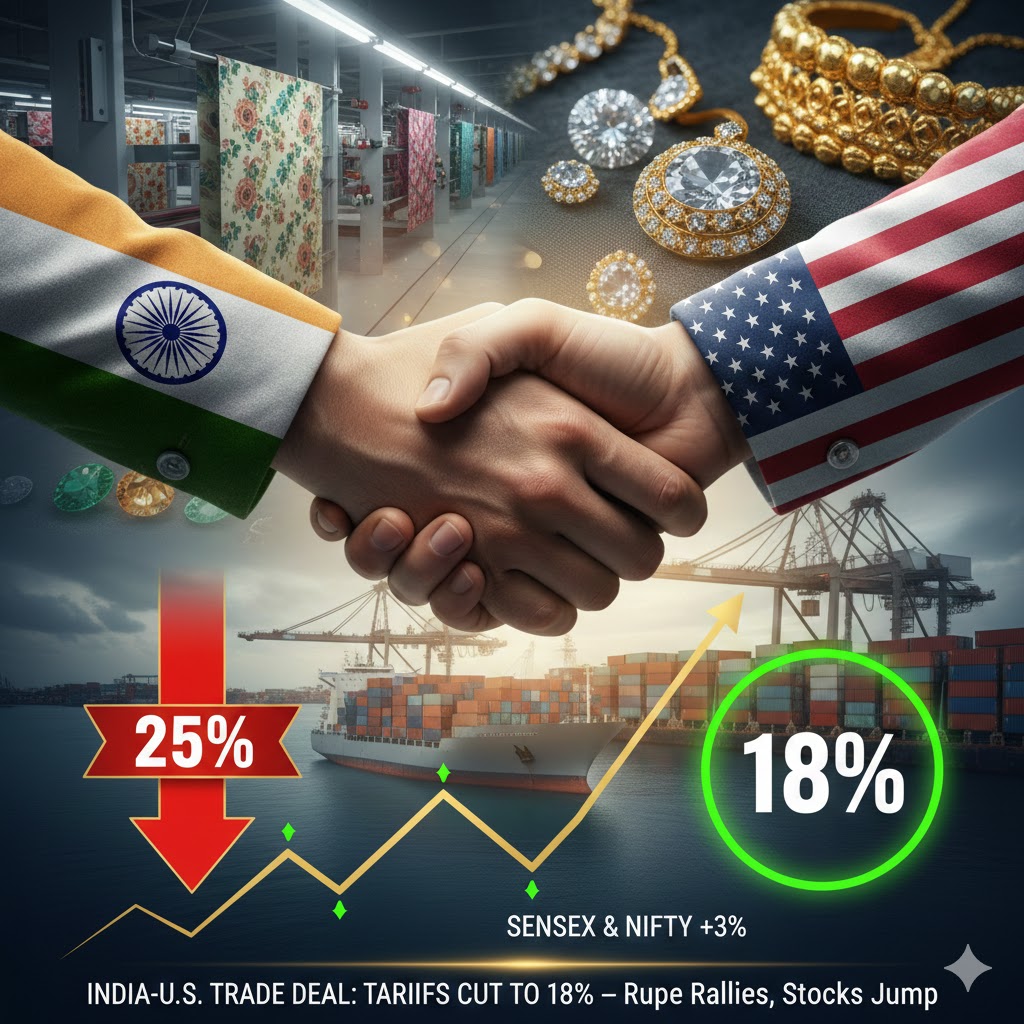
U.S. President Donald Trump confirmed that tariffs on Indian goods would be reduced to 18%, down from the previous 25%. This is expected to provide a major boost to India’s exports, particularly in sectors such as textiles, leather, and gems. - Sensitive Sectors Excluded
Commerce Minister Piyush Goyal emphasized that sensitive sectors, particularly agriculture and dairy, had been safeguarded from any trade concessions, addressing concerns that these vital industries could suffer. This move is expected to protect the livelihoods of millions of Indian farmers and workers in rural areas. - Positive Economic Impact
Finance Minister Nirmala Sitharaman expressed optimism that the tariff reduction would significantly benefit India’s export sectors, with exports anticipated to pick up momentum in the coming months. The deal is seen as a key step in strengthening bilateral ties and improving the trade balance between the two nations. - Political Dynamics and Trade Benefits
Piyush Goyal also took the opportunity to criticize the Opposition’s conduct in the Lok Sabha, calling their disruptions during the trade deal debate “disgraceful.” He defended the deal, stating that it was the best deal India had secured in comparison to neighboring countries, particularly in terms of benefits for small businesses, MSMEs, and key industries. - Stock Market Rally and Currency Boost
The announcement of the trade deal sent positive signals to the stock market, with benchmark indices like Sensex and Nifty surging nearly 3%. The deal has provided a significant boost to Indian stocks in sectors such as textiles, seafood, and specialty chemicals. Furthermore, the Indian rupee experienced a sharp rally, fueled by the optimism surrounding the deal. - Prime Minister Modi’s Role
Prime Minister Narendra Modi took to social media to express his satisfaction with the deal, thanking U.S. President Trump for the tariff reduction and highlighting the mutual benefits of the agreement. Modi also pointed out that the agreement was a result of his close relationship with President Trump, which has enabled both countries to work together more effectively on issues of global concern.
What’s Next for India-U.S. Trade Relations?
The finalization of the trade deal is expected to lead to closer economic ties between the two nations. Both sides have already started working on a joint statement that will outline the key provisions of the deal. This development is expected to unlock new opportunities for cooperation, particularly in the areas of technology, defense, and services.
As the deal enters its final stages, it is clear that the India-U.S. partnership is set to grow even stronger, with both sides benefiting from a framework that addresses each nation’s key concerns while promoting greater trade and investment flows.