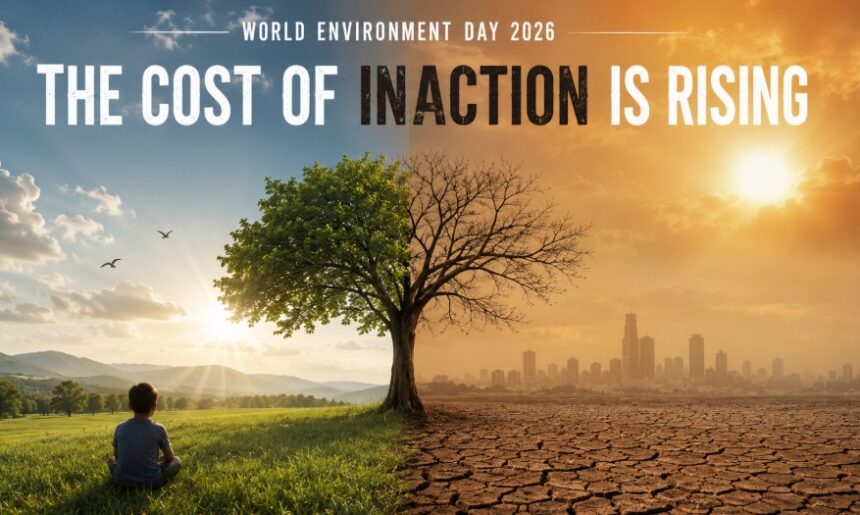
Friday, June 5, 2026: For decades, climate change was treated as a future challenge, something policymakers, scientists and governments would eventually need to address.
That future has arrived.
From record-breaking heatwaves across India to devastating floods, prolonged droughts, shrinking water resources and increasingly unpredictable weather patterns, the world is witnessing the growing consequences of a warming planet. As World Environment Day 2026 is observed globally, the conversation is no longer about whether climate change is real. It is about whether societies can move fast enough to respond.
The warning signs are everywhere.
Cyclone Fani displaced millions in eastern India. Pakistan’s catastrophic floods submerged vast regions and displaced communities on an unprecedented scale. Cities across continents have grappled with water shortages, while heatwaves have become longer, more frequent and more intense.
The growing impact of El Niño has further amplified concerns, affecting agriculture, food security, water availability and livelihoods across multiple regions.
Climate experts increasingly view these events not as isolated disasters, but as signals of a larger environmental shift.
World Environment Day 2026: Why This Decade Could Define Humanity’s Future
The challenge facing the world today is not a lack of awareness.
Most people understand the risks of climate change. What remains missing is large-scale participation.
Environmental action can no longer be confined to annual campaigns or symbolic observances. It must become part of everyday decision-making.
Reducing waste, conserving water, adopting sustainable consumption habits, supporting public transport, protecting local ecosystems and embracing cleaner energy solutions are actions that millions of citizens can collectively undertake.
The environmental movement begins not in conference halls, but in homes, schools, workplaces and communities.
Governments Face a Defining Test
Governments have a critical role to play in accelerating the transition to a more sustainable future. And, globally Governments face a defining text as we step into celebratory World Environment Day 2026.
This includes expanding renewable energy capacity, protecting natural resources, strengthening climate-resilient infrastructure, improving urban planning and investing in sustainable mobility.
Environmental sustainability can no longer remain separate from economic policy.
The countries that successfully integrate climate resilience into development strategies are likely to be better positioned to navigate future environmental and economic shocks.
Why Policymakers Must Think Beyond The Next Election Cycle
Climate change does not operate on political timelines.
The decisions taken today on energy, water management, urbanisation, agriculture and industrial growth will influence generations to come.
Policymakers face the challenge of creating frameworks that reward sustainable practices, encourage green innovation and accelerate investments in climate-resilient technologies.
Going beyond World Environment Day 202 – The transition will require long-term thinking, consistent policy support and collaboration between governments, businesses and citizens.
A Shared Responsibility
The climate crisis is often discussed in terms of global agreements and national targets.
But its impact is deeply personal.
It affects the air people breathe, the water they drink, the food they consume and the future they leave behind for the next generation.
World Environment Day 2026 serves as a reminder that environmental stewardship cannot be delegated to governments alone. It requires collective action from citizens, businesses, institutions and policymakers alike.
The climate crisis is no longer tomorrow’s problem.
It is today’s reality.
And the decisions made over the next decade may determine whether future generations inherit a planet that is more resilient, or more vulnerable, than the one we know today.