Thursday, July 9, 2026: There was a time when an Indian startup pitching defence technology would have struggled to attract venture capital, in the deep-tech sector.
The sector moved slowly, procurement cycles were long, governments dominated demand, and software investors preferred businesses that could scale in months instead of years.
That equation is beginning to change.
Blurgs AI’s $2.2 million funding round isn’t remarkable because of its size. It’s remarkable because it reflects a growing willingness among venture investors to back companies building intelligence software for sectors once considered too complex, too regulated and too niche for traditional startup capital.
The shift says as much about the market as it does about the company.
Over the past three years, AI investment has largely centred on productivity software, coding assistants and enterprise copilots. But the next frontier is increasingly becoming decision intelligence, software designed not to generate text, but to help governments, ports, defence organisations and critical infrastructure operators make better decisions from vast amounts of fragmented data.
Deep-Tech: The Real Bet Behind Blurgs AI’s $2.2M Raise
That’s precisely where Blurgs AI sits.
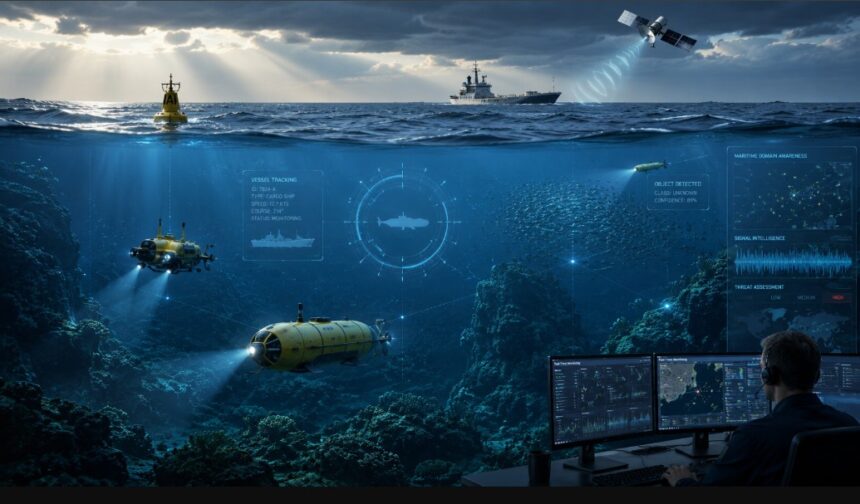
Its products span commercial maritime operations and defence intelligence, using AI to monitor activity across ports, fleets and security environments. While generative AI has dominated headlines, companies like Blurgs are building systems that rarely make consumer news but increasingly attract institutional customers.
Another detail stands out.
Before institutional investors came in, the company had already secured customers including the Indian Navy, Indian Coast Guard, DRDO laboratories, Bharat Electronics and maritime organisations overseas.
For investors, that matters more than a flashy product demo. It suggests a company that has already navigated one of deep-tech’s biggest hurdles: proving that someone will actually deploy the technology.
More broadly, the funding reflects a structural change underway.
Geopolitical tensions, supply-chain disruptions and maritime security have pushed governments to modernise surveillance and operational intelligence. At the same time, AI has reached a point where analysing millions of sensor inputs, satellite feeds and operational signals has become commercially viable.
The opportunity is no longer limited to defence budgets.
Ports, shipping companies, fisheries, offshore infrastructure and logistics operators increasingly face the same challenge: turning overwhelming volumes of operational data into decisions made in real time.
That is creating an entirely new software category.
So, If the last decade belonged to SaaS, the next may belong to strategic software.
The companies likely to define India’s next deep-tech chapter won’t necessarily build another chatbot or productivity app. They’ll build infrastructure that governments, manufacturers, utilities and defence organisations cannot operate without.
Blurgs AI’s funding round won’t be remembered for its $2.2 million valuation milestone.
It may instead be remembered as another sign that venture capital is starting to price a different kind of AI opportunity, one where geopolitical relevance matters just as much as technological innovation.