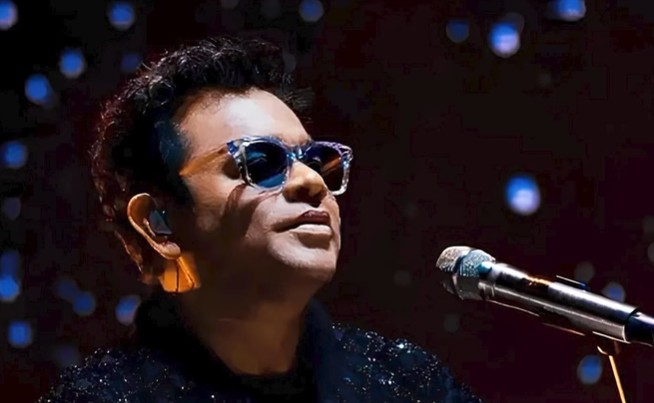
January 19, 2026: A.R. Rahman’s attempt to clarify his remarks on alleged communal bias in the Hindi film industry has done little to quiet the conversation, with reactions continuing to pour in from political leaders, film personalities and social media users.
The controversy traces back to Rahman’s interview with BBC Asian Network, where the composer reflected on how power dynamics within Bollywood have shifted in recent years. While he said he never felt marginalised during the early phase of his career, AR Rahman observed that creative authority today often lies with people disconnected from the arts. He added that the change could carry communal undertones, though he did not describe any direct discrimination against himself.
Following sharp criticism online, the Oscar-winning musician released a video message on social media to clarify his position. AR Rahman emphasised that music remains his only form of communication and cultural expression, and reiterated that India continues to be at the heart of his creative life. He said his remarks were never meant to wound sentiments and acknowledged that intentions can sometimes be misunderstood.
AR Rahman Clarification Keeps Bollywood Bias Debate Alive, Draws Political and Industry Responses
In the video, Rahman spoke of India as a space that nurtures diversity and artistic freedom, calling the country his home, teacher and inspiration. He also reflected on recent projects, including collaborations with young musicians, mentoring orchestras and scoring large-scale productions, which he said have reinforced his commitment to celebrating plurality through music.
Political support soon followed. Peoples Democratic Party (PDP) president and former Jammu and Kashmir Chief Minister Mehbooba Mufti backed Rahman’s comments, stating that Bollywood has historically mirrored the social and cultural realities of India. She argued that dismissing personal experiences does not erase uncomfortable truths about the present.
The composer’s clarification also drew attention from actor and parliamentarian Paresh Rawal, who reshared Rahman’s video and described him as “our pride.” Rawal’s post, however, triggered divided reactions online. While many fans welcomed the gesture as a show of solidarity, others questioned whether the message was sincere or laced with sarcasm, reigniting debate in comment sections.
Adding another layer to the discussion, veteran singer Hariharan commented on the state of the music industry, pointing to a growing disconnect between creativity and decision-making. He warned that prioritising commercial considerations over artistic understanding could undermine the future of music.
With voices from politics, cinema and music weighing in, Rahman’s remarks have evolved beyond a single interview into a broader debate on creativity, power and representation in Bollywood, one that continues to unfold.