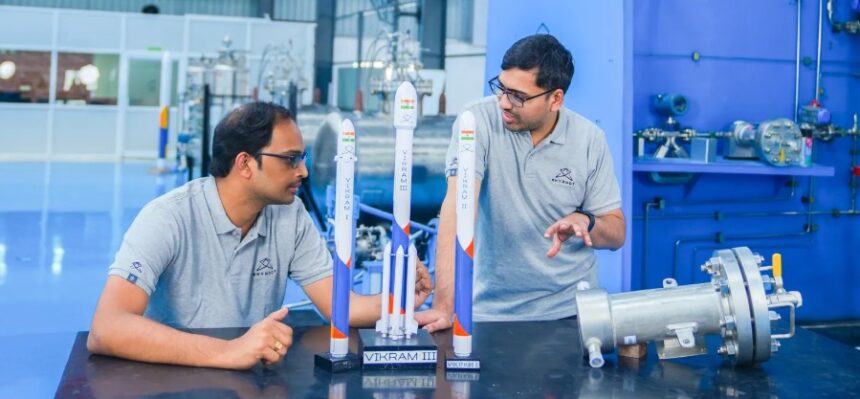
Hyderabad, Thursday, May 7, 2026: A fresh wave of investor confidence is powering India’s private space sector, with Hyderabad-based Skyroot Aerospace announcing a $60 million (around Rs 570 crore) funding round that has lifted its valuation to $1.1 billion.
The latest investment cements Skyroot’s position as India’s first space-tech unicorn and highlights growing global interest in the country’s emerging commercial space industry.
The round was jointly led by Sherpalo, the venture firm founded by Silicon Valley investor Ram Shriram, along with Singapore sovereign wealth fund GIC. Existing investors including BlackRock, Greenko Group founders, and Arkam Ventures also increased their participation, while Playbook Partners and Shanghvi Family Office joined as new backers.
Skyroot’s valuation has more than doubled since 2023, when the company was estimated to be worth about $519 million. The startup has now raised over $160 million in total funding since inception.
The company is preparing for the launch of Vikram-1, a privately built orbital-class rocket that could mark another milestone for India’s space ecosystem. Skyroot had previously made headlines with the successful launch of Vikram-S, becoming one of the first private Indian companies to send a rocket into space.
Skyroot Aerospace Enters Unicorn League

Speaking on the new investment, co-founder and CEO Pawan Kumar Chandana said the funding arrives at a critical stage as the company moves closer to launching Vikram-1. According to him, the backing from global investors reflects confidence in Skyroot’s technology roadmap and long-term growth plans.
Investor Ram Shriram said the startup has demonstrated strong progress since its early days and is now approaching a defining moment with its orbital launch ambitions. He added that lowering the cost of access to space remains a major global opportunity, and Skyroot is positioning itself to address that challenge with efficient launch solutions.
The company plans to use the fresh capital to expand production capacity, increase the frequency of Vikram-1 launches, and accelerate development of Vikram-2, a heavier launch vehicle designed for one-tonne payload missions using advanced cryogenic propulsion technology.
India’s private space industry has attracted increasing investor attention following policy reforms that opened the sector to private participation, creating opportunities for startups in launch services, satellite manufacturing, and commercial space operations.