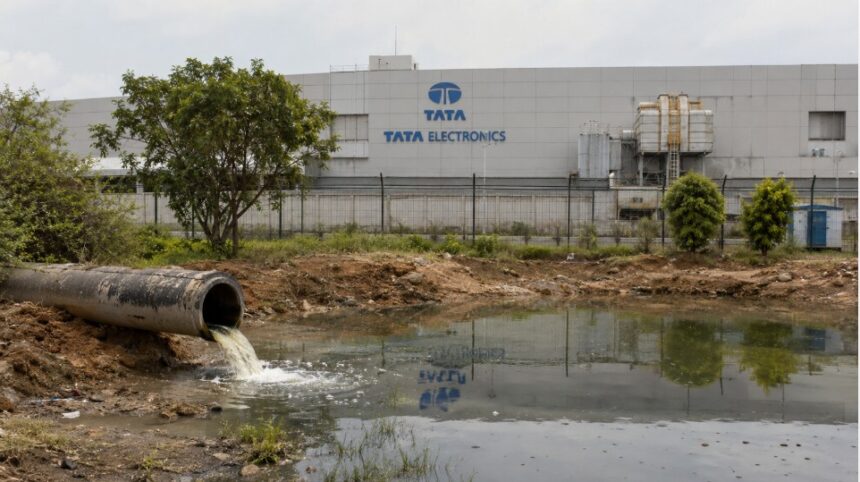
Saturday, June 13, 206: India’s growing role in Apple’s global manufacturing network has come under fresh scrutiny after environmental regulators accused Tata Electronics of allowing industrial wastewater from its Hosur facility to contaminate groundwater in nearby agricultural areas.
The Tamil Nadu Pollution Control Board (TNPCB) has issued a warning notice to the company following a series of inspections conducted between December 2025 and May 2026. According to the regulator, wastewater generated at the plant was discharged into an on-site rainwater harvesting pond that subsequently overflowed, allegedly affecting open wells and groundwater sources used by neighboring farms.
𝗥𝗲𝗴𝘂𝗹𝗮𝘁𝗼𝗿 𝗪𝗮𝗿𝗻𝘀 𝗧𝗮𝘁𝗮 𝗢𝘃𝗲𝗿 𝗔𝗹𝗹𝗲𝗴𝗲𝗱 𝗚𝗿𝗼𝘂𝗻𝗱𝘄𝗮𝘁𝗲𝗿 𝗖𝗼𝗻𝘁𝗮𝗺𝗶𝗻𝗮𝘁𝗶𝗼𝗻
The Hosur facility manufactures iPhone back panels and other precision components, making it a strategically important site within Apple’s rapidly expanding India supply chain. The allegations stem from complaints filed by local farmers, who reported deteriorating water quality and raised concerns about potential impacts on agricultural land surrounding the factory.
In its response, Tata Electronics said an independent assessment conducted by an accredited laboratory found the company to be fully compliant with applicable environmental regulations. The company maintained that it follows responsible operational practices and has already submitted its explanation to the authorities.
The development places a spotlight on environmental compliance within India’s electronics manufacturing sector, which is attracting billions of dollars in investment as global technology companies diversify production away from China. While the country has emerged as a preferred destination for smartphone manufacturing, regulators are increasingly under pressure to ensure industrial expansion does not come at the expense of local ecosystems and communities.
The notice also adds to a string of operational challenges linked to Apple’s India supply chain in recent years. A fire at the same Hosur facility in 2024 temporarily disrupted component production, while earlier incidents at supplier plants highlighted the vulnerabilities that can accompany rapid manufacturing scale-up.
For Apple and its suppliers, the issue extends beyond regulatory compliance. Environmental performance has become a critical metric in global supply chains, particularly as investors, customers, and governments demand greater transparency around sustainability practices. Any prolonged dispute or enforcement action could draw attention to how multinational technology companies oversee environmental standards across their expanding manufacturing networks.
The outcome of the regulator’s review may serve as an important test of how India balances industrial growth ambitions with environmental accountability as it positions itself as a global electronics manufacturing hub.