Saturday, June 6, 2026: Every once in a while, a film arrives with a premise so compelling that you want it to succeed from the opening frame. Peddi is one of those films.
Director Buchi Babu Sana bases the story around a forgotten chapter of rural India, villages that existed for years without official recognition, leaving residents without identity documents, voting rights, or visibility in government records. It is the kind of real-life issue that deserves cinematic attention, and Peddi deserves credit for bringing it into mainstream conversation.
The problem is that the film spends too much time trying to be everything at once.
Part sports drama, part social commentary, part mass entertainer and part emotional saga, Peddi keeps shifting between genres without fully committing to any of them. The result is a film that feels larger than life in scale but surprisingly inconsistent in storytelling.
Peddi Review: Strong Purpose, Shaky Execution
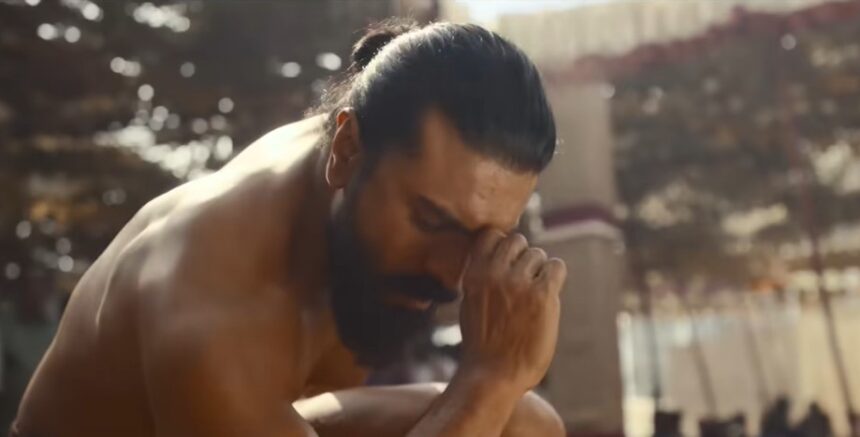
The biggest winner here is Ram Charan. His performance gives the film credibility even when the screenplay loses direction. He convincingly portrays a man driven by purpose rather than personal glory, and his physical transformation for the role adds authenticity to the character. More importantly, he brings emotional depth to scenes that might otherwise have felt overly dramatic.
There are moments when Peddi shows glimpses of the film it could have been. The struggle for recognition, the frustration of being ignored by the system and the determination of an entire community to be acknowledged create some of the movie’s most memorable passages. These scenes feel grounded, urgent and emotionally effective.
Unfortunately, those moments compete with a bloated narrative. The film frequently pauses its strongest storylines for commercial detours that contribute little to the central conflict. The romance track in particular feels disconnected from the emotional stakes of the film and often slows the narrative momentum.
Technically, however, Peddi rarely disappoints. A. R. Rahman delivers a soundtrack and background score that elevate key moments, while cinematographer R. Rathnavelu captures the rural landscape with impressive scale and beauty. Several sports sequences are mounted with ambition and visual flair.
What ultimately stays with the audience isn’t the victories on the field, but the question at the heart of the story: what happens when people are denied recognition in their own country?
That question gives Peddi relevance. Unfortunately, relevance alone isn’t enough to sustain a nearly three-hour film.
Peddi is admirable for its intent, ambitious in its scope and elevated by a committed lead performance. But it is also a reminder that powerful ideas need equally focused storytelling. The film succeeds in making its point, even if it takes a longer and more uneven route than necessary.